
We provide a safe, council‑compliant approach to void filling in Sydney today, and we aim to give you clear options fast. If you need an experienced company to stabilise subgrade and restore support, call 1300 970 930 to speak to Chris.
We are Underpinning Sydney, structural preservation specialists with over 20 years’ experience. We explain each step in plain language and focus on safety, certification and lasting outcomes.
Our methods include concrete underpinning, resin injection, screw piling and underpinning that suit each site. We co‑ordinate engineering reports and deliver council‑compliant documentation so you get real peace of mind.
We respond across Greater Sydney areas with minimal disruption. You will receive honest advice, transparent fixed prices and no pressure to add unnecessary work.
Key Takeaways
- We offer fast, compliant solutions for voids under slabs and footings.
- Licensed team with 20+ years’ experience protects homes and investments.
- Council‑compliant delivery, certification and engineering coordination included.
- We use concrete, resin and ground improvement matched to your site.
- Call 1300 970 930 to speak to Chris for a free, no‑obligation assessment today.
Trusted void filling services sydney for stable, compliant foundations
We deliver engineered solutions that stabilise foundations and give you lasting reassurance. Our licensed, insured team brings over 20 years’ experience to every job. We focus on safety, certified outcomes and minimal disruption to your home.
Peace of mind comes from clear scope, fixed‑price quotes and documented sign‑off. We plan access to keep your household operating while work proceeds. Structural engineering reports and council paperwork are coordinated for you.
- We restore foundation support so your home is safe, serviceable and compliant.
- Quality assurance and engineered methods matched to local soils and building forms.
- All records supplied for insurers and council certification.
- Call 1300 970 930 to speak to Chris for a calm, practical solution. Email photos for a quick review.
| Feature | Benefit | What you receive |
|---|---|---|
| Licensed team | Risk‑managed, insured work | Compliance certificates and as‑built records |
| Engineered methods | Long‑term structural integrity | Fixed‑price quote and documented scope |
| Minimal disruption | Household remains serviceable | Planned access and clean handover |
| Concrete and other materials | Durable, proven solution | Material specifications and warranty |
What is void filling and why your home’s structural integrity depends on it
Soil gaps beneath a slab can erode quietly and threaten a home’s load‑bearing parts. We explain the engineering basics simply so you can see the risk and the remedy.
Understanding subgrade voids under slabs, footings and walls
A void is a gap in the soil that no longer supports concrete or masonry. These hollows often form beside underground pipes when leaking joints let water wash fines away.
- Hidden hollows form under slabs, footings and walls.
- Leaking pipes and poor drainage remove soil and create loss of support.
- Controlled injection or grout restores bearing and compacts surrounding ground.
How voids compromise safety, serviceability and compliance
Without proper support, concrete elements bend, crack or settle. Doors bind, floors become uneven and building compliance can fail.
Hydrophilic polyurethane can seal joints and stop further water egress. The resin creates a three‑dimensional waterproof barrier inside concrete and around nearby structures.
For heavy traffic areas we use products and mixes that restore structural strength. Our typical process includes a tailored assessment, resin or grout injection and full documentation to meet council and insurer requirements. We choose the right approach for the ground and the structure.
Recognising the warning signs: cracks, uneven floors and gaps around walls
Early signs can be subtle. New or widening cracks in plaster or brick deserve attention.
Uneven tiles or a sloping room often point to soil loss under concrete. Doors and windows that jam show movement in the area.
- Look for new or growing cracks in internal and external wall finishes.
- Gaps at skirtings, cornices or around door frames indicate movement.
- Patio slabs and paths that tip or separate often relate to nearby ground loss.
- Doors and windows that bind suggest differential settlement in the area.
Book an inspection early to limit repair scope and cost over time. Email photos for a fast preliminary review and clear next steps.
We prioritise safety if structural issues are suspected on site. We then outline a staged repair plan so you can act with confidence.
| Warning sign | Likely cause | Immediate action |
|---|---|---|
| New cracks in walls | Foundation movement or moisture | Arrange a photo review and inspection |
| Uneven floors | Soil loss beneath slab | Schedule a site visit and level survey |
| Gaps at skirting | Differential settlement | Document, then plan staged repairs |
For tailored guidance, read our short note on foundation failure guidance or call us for a free assessment of your house today.
Common causes of voids in Sydney soils
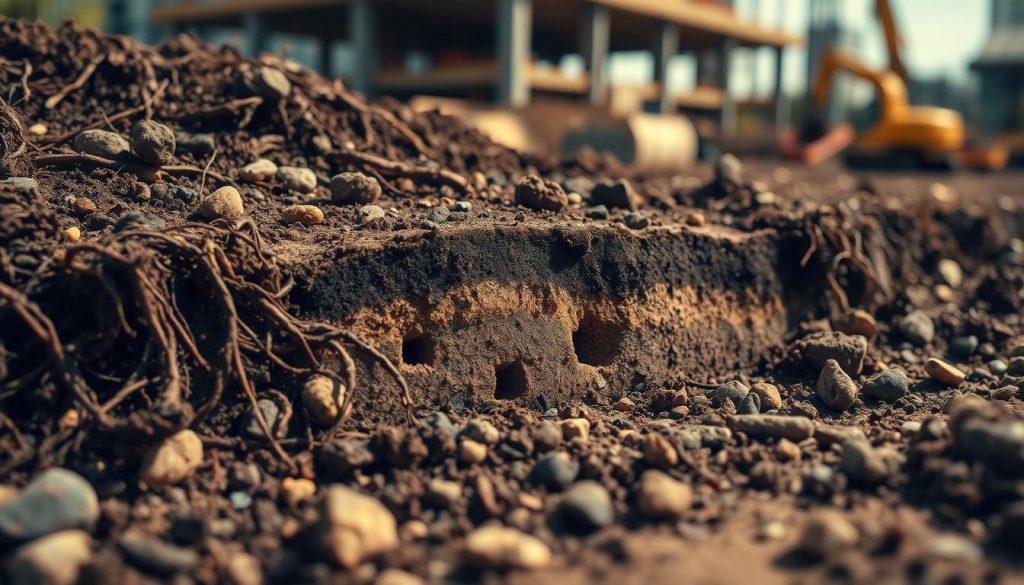
Many building problems start with simple water leaks that remove soil under concrete. We see this often around stormwater lines and drains. Leaks wash fines from beneath slabs and create unsupported hollows.
Water ingress, leaking pipes and washout-driven soil erosion
Leaking stormwater or sewer pipes wash away subgrade and lead to gaps beneath a slab. Downpipes and poor surface drainage focus water into one vulnerable zone.
Practical remedy: We trace the source, seal pipes where needed and recommend targeted injections to restore bearing.
Reactive clays, poorly compacted fill and construction defects
Reactive clay shrinks and swells with moisture changes. Poorly compacted fill from earlier construction can settle over time.
Practical remedy: We match the material used to the ground type and load, choosing grout, resin or concrete where appropriate.
Traffic loads, vibration and settlement adjacent to services
Heavy vehicles and vibration near trenches speed up settlement beside buried services. Construction defects or missing separation layers allow soil migration.
Our approach: Non‑invasive diagnostics guide a focused scope of work so we fix the cause and reduce the chance of recurrence.
- We locate leaks and map the problem area.
- We recommend corrective work matched to the soil and loads on your projects.
- We also advise on drainage and maintenance to protect the building long term.
Our engineered methods for filling voids with minimal disruption
We use engineered ground solutions that restore support while keeping disruption to your household low. We plan access, reduce noise and protect finishes so you can carry on with daily life.
Resin injection to stabilise soil and reinstate support
Resin injection compacts soil and fills targeted paths with high control. Hydrophilic polyurethane is used where water paths exist. It seals wet joints and arrests further water movement quickly.
Grout and cementitious solutions for sandy soils and larger cavities
Ultra‑superfine cementitious grout suits sandy ground and interconnected cavities. It injects at low pressure, sets in 4–8 hours and is permeable where needed. Fast set times mean less downtime and rapid return to service.
Concrete underpinning, screw piling and retaining support for heavy loads
Where higher capacity is required, we specify concrete underpinning or screw piling. We also stabilise retaining walls and subfloors to protect the wider structure. All work follows NSW remedial standards and certification.
- We select the method that gives the safest, most efficient result.
- Quality materials and tested products for Australian homes.
- One coordinated plan: repair, documentation and final sign‑off.
| Method | Best for | Key advantage |
|---|---|---|
| Resin injection | Targeted soil compaction | Rapid cure; seals water paths |
| Cementitious grout | Sandy soils, larger cavities | Low pressure; sets in 4–8 hours |
| Concrete underpinning | Heavy load zones | High structural capacity |
| Screw piling | Restricted access or deep support | Minimal excavation; fast installation |
Resin injection done right: controlled expansion, rapid cure, reliable results
Resin injection delivers fast, controllable ground support under slabs without major excavation. It is a precise, minimally invasive process that compacts soil and restores bearing quickly.
Targeted injections at multiple depths to compact soil and fill gaps
We map the soil profile and floor response in real time. Injections are staged from about 800 mm to up to 6.5 m where geotechnical data requires it.
Multiple depth points compact layers and close gaps without over‑lifting concrete. On‑tool monitoring ensures consistent quality.
Hydrophilic polyurethane options to seal joints and arrest water egress
Hydrophilic polyurethane can be injected at joints inside concrete to form a waterproof seal. This stops ongoing water paths and protects surrounding structure and walls.
Environmentally safe products and clean site work practices
We use environmentally safe product formulations and non‑invasive work techniques suited to occupied homes. Drill holes are small and neat and are grouted on completion at wall and floor locations.
- Controlled expansion restores support without lifting slabs.
- Real‑time monitoring makes results repeatable.
- The team keeps work areas tidy and explains each step to you.
Process you can trust today: assessment, injection and verification
A prompt, free inspection and photo review lets us tailor a fast, documented process for your home. We begin with a clear scope so you know the expected time, access needs and outcomes.
Free no‑obligation structural assessment and photo review
Start with a free structural assessment or send photos today. We review records and flag any immediate issues.
Where needed, we coordinate a site inspection with a structural engineer to confirm requirements.
Drill, inject, expand: our step‑by‑step workflow and on‑site monitoring
We survey levels and plan safe access to the site. Small drilled holes allow precise resin injection and controlled expansion.
On‑tool monitoring records movement so we adjust injection locations and volumes in real time.
Post‑fill validation: relevel checks and engineering report coordination
Most residential concrete work is finished in hours, not days. We complete relevel checks and seal drill points before we leave.
You receive a fixed quote, documented results and coordinated engineering reports if needed. Our service includes aftercare advice and clear timeframes so you stay informed at every step.
- Free assessment: send photos today.
- Fast completion: most jobs done in hours.
- Full documentation: reports, certificates and aftercare.
| Stage | What we do | Outcome |
|---|---|---|
| Inspection | Photo review or site visit | Clear scope and fixed quote |
| Injection | Small drill holes, resin injection | Rapid expansion and ground compaction |
| Verification | Relevel checks and report coordination | Documented sign‑off and monitoring plan |
For more on structural options, see our underpinning overview.
Safe, certified and council-compliant delivery
We deliver each job with a safety-first mindset and formal compliance at every step. You will receive clear permits, risk plans and council-ready documentation.

Licensed, insured teams and risk‑managed work zones
Our company runs licensed crews for all remedial work. We hold current insurance and maintain a strict site induction for everyone on site.
We set up controlled work zones to protect occupants. Where access is shared we brief neighbours to reduce disruption.
Quality assurance, documentation and as‑built records
Our quality process covers mix control, injection volumes and lift monitoring on every project.
We record injection points, produce as‑built plans and take photos so you get complete records for insurers and council.
- Licensed teams: full insurance and credential checks.
- Risk control: fenced zones and utility locating before work.
- Protecting walls: we safeguard adjoining structures and paths.
- Low disruption: planned access and neighbour briefings.
| Item | What we do | Outcome |
|---|---|---|
| Work planning | Site risk assessment and permits | Council compliance and safe site |
| QA | Mix, volumes and monitoring | Consistent quality for structures |
| Records | As‑built plans and photos | Documented proof for projects |
Applications across residential, commercial and civil structures
From single houses to larger projects across metropolitan areas, we tailor methods to suit the structure and soil. We match material and approach so you get a durable outcome.
Practical examples: targeted resin injection restores sunken concrete floors in a house. Strata blocks benefit from slab stabilisation and wall crack remediation. Warehouses and hardstands are stabilised before heavy vehicles return to work.
We also support civil projects such as culverts, service corridors and retaining walls. Foundations under patios, stairs, pools and driveways are common tasks. Our experts adapt methods for heritage homes and modern slabs.
We coordinate with other trades to streamline live projects and minimise disruption. Flexible scheduling helps in busy areas and on time‑sensitive contracts.
- House floors: targeted resin injection for local lift and compaction.
- Strata: slab stabilisation and crack repair to protect shared assets.
- Commercial and civil: heavy‑duty concrete repair and ground support.
| Structure | Typical issue | Common method | Expected outcome |
|---|---|---|---|
| House | Sunken slab | Resin injection | Rapid support and reinstated levels |
| Strata block | Slab movement, wall cracks | Slab stabilisation & crack remediation | Shared areas restored and certified |
| Civil / Industrial | Undercut concrete, service trenches | Grout, underpinning or piling | High capacity support for heavy loads |
When void filling is the solution — and when underpinning or piling is smarter
The right path depends on soil, loads and the service life you need. We give a calm, practical decision framework so you can choose with confidence.
Decision framework: soil conditions, loads and serviceability targets
We assess soil reactivity, moisture and existing bearing performance first. That tells us if a local repair will hold or if deeper support is needed.
- Localised loss: resin injection suits limited settlement and targeted support.
- Higher loads or deep movement: underpinning or screw piling provides higher capacity.
- Water active on site: we seal joints and improve drainage before other work.
Combining repair, wall work and subfloor ventilation
We often combine resin with wall crack repair to lock in the outcome. Subfloor ventilation reduces moisture and future movement over time.
| Issue | Preferred method | Outcome |
|---|---|---|
| Limited settlement near a slab | Resin injection | Rapid support; minimal disruption |
| Structural load increase or deep loss | Concrete underpinning or piling | High capacity, long term stability |
| Water ingress and active leaks | Seal joints, improve drainage | Stops washout; protects repairs |
We outline methods, expected outcomes and a monitoring plan so you know the cost, risks and timeframes. For a clear comparison of resin and concrete options see our resin vs concrete comparison.
Cost, timing and access: what affects pricing for void filling in Sydney
We offer clear pricing and realistic programs so you know what to expect. Cost and time vary with site complexity and the extent of the ground issue. We start with a quick photo review and can arrange an on‑site inspection today.
Extent of voids, site constraints and chosen materials
Price depends largely on the area affected and the stability of surrounding soil. Larger hollows or unstable ground require more product and longer work time.
Access around utilities, ceiling height and tight subfloors can add to the complexity. Small drilled holes and limited digging keep disruption low for most homes.
Transparent fixed‑price quotes and realistic timeframes
We provide fixed‑price quotes after an on‑site inspection or detailed photo review. That quote lists inclusions, staging and any temporary area restrictions.
Many residential injection jobs finish in hours. Materials cure quickly and works often proceed in poor weather. We plan around utilities, neighbours and access so disruption is minimal.
- Price drivers: extent of issue and soil stability.
- Site factors: access, services and ceiling height.
- Product choice: matched to objectives and volumes needed.
- Timing: most homes completed in hours with little disruption.
- Commitment: fixed quote after inspection today and clear aftercare options.
| Factor | Effect on cost | What we do |
|---|---|---|
| Extent of problem | Higher product volumes and time | Tailored quote and scope |
| Site access | Additional labour or small clearances | Planned staging and safety checks |
| Weather & utilities | Minor scheduling changes | Flexible windows and neighbour briefings |
We remain available after completion to discuss any issues that arise and to provide optional aftercare work. Call us for an inspection today and a clear, fixed price so you can plan with confidence.
Why choose Underpinning Sydney for void filling and ground improvement
Our priority is to protect your home with clear, engineered choices that avoid unnecessary work.
20+ years’ experience, honest assessments and no upselling
We are a company with more than two decades of hands‑on experience. Our experts give straight advice and recommend only what the foundation needs.
Honesty matters: you will not face pressure to add extras that do not improve safety or longevity.
Minimal disruption, clean handover and peace of mind
We complete concrete stabilisation and related work with tidy, low‑impact methods. Our crews protect walls and finishes while on site.
- You work with a trusted local company with 20+ years of delivery.
- Our team protects your foundation first and plans safe, efficient repair.
- We supply quality documentation, engineering reports and a clear handover.
- We also support wall crack repair and improved subfloor ventilation for your house.
Call 1300 970 930 to speak to Chris and book an inspection. We aim to give you calm, practical answers and lasting peace of mind.
Service areas and rapid response across Greater Sydney
Our teams cover Greater Sydney suburbs from the coast to the foothills. We respond quickly to assess a house, unit or commercial building and advise on next steps.
Call today for rapid triage or email photos for a same‑day preliminary assessment. We prioritise urgent projects where safety or access is affected.
We know local water patterns and soil behaviour by suburb. That helps us choose the right resin and injection approach for each area and access type.
- We service all Sydney areas, from beaches to inner hills.
- Houses, townhouses and units receive tailored stabilisation plans.
- We coordinate with building managers for strata and commercial projects.
- Temporary measures are advised if an area needs immediate support.
| Coverage | Typical response | What you receive |
|---|---|---|
| Coastal suburbs | Same‑day photo triage | Preliminary plan and timing |
| Inner metro | Rapid site scheduling | Access‑specific resin and rigs |
| Outer foothills | Coordinated engineer visits | Documented scope for projects |
Contact us to book a fast review. We give clear options so you can act with confidence.
Conclusion
An engineered approach ties foundation repairs, wall remediation and drainage fixes into one reliable outcome. This process treats your foundation and foundations as a unified system for lasting stability.
We combine underpinning, resin and targeted injection or concrete work to match the risk and structure. Small‑scale repair limits disruption and resolves cracks and related wall issues quickly.
Controlled injection delivers rapid, reliable improvement. You receive compliant construction records, aftercare guidance and a clear timeframe so you regain peace of mind fast.
Call 1300 970 930 to speak to Chris, book a site visit, or email photos now. We provide engineered, certified solutions and finish most jobs within tight timeframes.