
We secure your home’s foundation with engineered solutions and clear pricing. Contact us to book a free structural assessment or call 1300 970 930 to speak to Chris about a site inspection.
We are Underpinning Sydney, structural preservation specialists with 20+ years’ experience. Our team inspects movement and subsidence risks, then recommends the best approach for your property.
Our core service is reinforced concrete underpinning designed to suit local soils and site access. Well‑constructed underpins can protect a foundation for decades, though curing requires a few days and careful sequencing on site.
We prioritise safety, council‑compliant reports and minimal disruption. Where appropriate, we explain alternatives such as resin injection or screw piles and their pros and cons so you can choose with confidence.
Key Takeaways
- We offer a free, no‑obligation structural assessment and clear inspection.
- Our team has 20+ years’ experience delivering engineered foundation solutions.
- Reinforced concrete underpinning gives long‑term protection when site conditions allow.
- We provide fixed‑price quotes, council‑compliant documentation and safe sequencing.
- Alternatives like resin or screw piles may be suitable depending on soils and access.
- Call 1300 970 930 to speak to Chris, arrange an inspection or email photos for a quick review.
Why homeowners trust Underpinning Sydney for safe, council‑compliant foundation repairs
Homeowners choose us because we pair engineering rigour with clear, no‑nonsense advice. We give an honest assessment first and only recommend underpinning when engineering shows it is required.
20+ years’ experience, fully licensed & insured, honest assessments
We are licensed and insured. Our experience helps us spot foundation issues quickly and advise practical repairs. You get a calm assessment and a clear inspection report.
Engineered, certifiable solutions that protect structural integrity
We coordinate engineering design and council paperwork. Works are certified and aimed to protect your house and foundations for the long term.
Minimal disruption on site with clear communication and fixed‑price quotes
Fixed‑price quotes, staged work and site safety keep disruption low. Our team manages trades, keeps work areas tidy and talks you through each stage.
- Honest assessment first — underpinning only when needed.
- We handle engineering, certification and council requirements.
- Clear timelines, fixed pricing and respectful crews.
- We service the local area and arrange inspections promptly.
| Benefit | What we do | Result for you |
|---|---|---|
| Assessment | Full inspection and engineering coordination | Clear options and no unnecessary works |
| Certifiable works | Licensed teams and council documentation | Compliance and peace of mind |
| Site management | Shoring, staged excavation, quality control | Minimal disruption and protected structure |
Free assessments and fixed‑price quotes. Call 1300 970 930 or book a site inspection to arrange an assessment today.
Recognising subsidence: signs, risks and Sydney‑specific soil behaviour
Small changes often precede bigger movement. Small cracks, sticking doors or a floor that tilts can be the first sign of subsidence in your house. We explain what to watch for and why action matters.
Common warning signs in homes
Look for fresh or widening cracks in walls near windows, doors and corners. Notice sloping floors, jammed doors, or gaps at skirtings and cornices.
Why foundations fail
Reactive clay and changing soil moisture cause seasonal shrink‑swell movement under foundations. Leaking drains, poor drainage and nearby excavation or heavy traffic can weaken ground bearing and accelerate movement.
Consequences of delayed repairs
If left unchecked, small faults grow. Walls open, slabs crack and floors dip more. Movement reduces property value and raises repair costs.
- Act early: a fast assessment limits damage.
- Stay safe: we prioritise structural integrity and clear next steps.
- Get certainty: inspection confirms whether foundation repair is needed.
traditional concrete underpinning sydney: our engineered process from assessment to certification
A measured inspection of foundations and site soils informs every step of our process. We assess loads, bearing soil and any signs of movement before we design a repair.
Structural assessment and soil considerations
We complete an engineering inspection and a written assessment. This confirms whether clay soils or other factors affect your foundation and guides design.
Hit‑and‑miss vs continuous methods
The hit‑and‑miss method suits full brick buildings with discrete footings. We alternate pins so the building stays stable during works.
The continuous method is engineered for sandstone footings and many heritage structures. A strip underpin distributes loads along the wall.
On‑site works, safety and certification
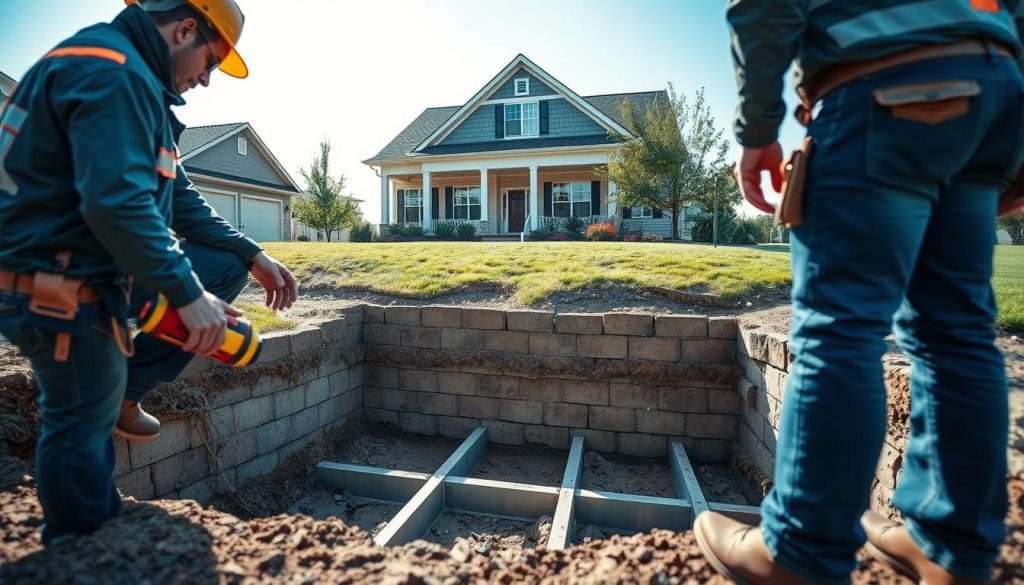
Excavation is staged in small bays. Holes are shored, steel reinforcement is placed, and high‑strength concrete is poured. Curing time is allowed between pours.
We monitor settlement, manage spoil and reinstate finishes. On completion you receive council‑compliant certification and a full report for peace of mind.
- Inspection first: design responds to loads and soils.
- Safe stages: temporary support and monitoring control settlement.
- Documentation: certified works and clear handover.
Ask about our financing options to help plan your repair with minimal stress.
Alternatives we also deliver: resin injection and screw piling for suitable structures
When a full strip repair is not needed, we offer engineered alternatives. We match each solution to soil tests and load requirements. This keeps work minimal and effective.

When resin injection helps re‑level and improve ground
Resin injection compacts the ground through tiny holes. It can re‑level floors quickly with minimal disruption.
Best for localised settlement and small areas of subsidence where soil improvement cures the problem.
Where screw piles shine: deeper bearing and tight access
Steel screw piles extend footings to deeper bearing strata. They work well where access is tight and above‑ground disruption must be low.
Piles suit sites needing extra capacity or where shallow soils lack reliable bearing.
When larger repairs need a more robust method
Chemical fixes are not ideal for widespread cracking, uncertain soils, or major water issues. In those cases, we prefer a durably designed foundation repair.
- Resin: quick return to service, low disruption.
- Screw piles: steel elements transfer loads deep and fast.
- We test, compare costs, and recommend the safest method for your property.
| Option | Best use | Disruption | Typical benefit |
|---|---|---|---|
| Resin injection | Localised settlement | Low | Fast re‑levelling |
| Steel screw piles | Deep bearing, tight access | Medium | High load capacity |
| Traditional underpinning | Severe damage, uncertain soils | High | Long‑term robustness |
We explain each method and provide a controlled design. For an overview of what underpinning involves, read what is underpinning. We always prioritise compliance and durable outcomes.
Transparent pricing, timeframes and factors that affect cost
We outline likely costs and program time so you can decide with confidence. Fixed‑price quotes show each line item so you see the scope and the method clearly.
Indicative ranges and how depth and access change pricing
Indicative rates for mass work often fall between $1,000 and $3,000 per metre. Shallow per‑underpin rates can range from about $1,000 to $4,500 each depending on access and depth.
Deeper holes need shoring and more labour. That raises the cost. Mini‑piled or steel pile options can cost more per pile.
Program duration: days to weeks
Small jobs may finish in a few days. Larger repairs run over several weeks.
We schedule curing time, staged work and monitoring to control movement and protect your structure.
What most influences final cost
Many factors change the quote. These include ground type, extent of damage, heritage fabric and nearby buildings.
- Access: tight areas add labour and time.
- Ground: reactive clay and water inflow demand shoring or dewatering.
- Structure: complex walls or floors need careful staging and stitching.
- Options: we compare concrete underpinning, resin and steel piles where suitable.
| Item | Typical cost driver | Effect on time |
|---|---|---|
| Per metre mass work | Depth, access | Few days to weeks |
| Per underpin/pier | Shoring, steel reinforcement | Extra days per staged bay |
| Resin or steel pile | Method choice, site access | Often faster; piles may need longer setup |
We provide options and explain likely cracks, gaps or other problems that may surface during repairs. Call us for a fixed quote and a clear timeline tailored to your property.
What you can expect from our team: services, reports and how to get started today
We handle every step of a repair project, from first inspection to final certification. Free assessments and clear documentation make the process simple for your home.
Our full service covers wall crack repairs, resin injection, screw piling, subfloor ventilation and retaining wall support. We also deliver engineered foundation solutions, practical reinstatement and on‑site coordination so work runs smoothly.
Engineering reports and council‑ready paperwork
Our engineers prepare reports, drawings and council‑compliant documentation. You get a certified assessment that insurers and council officers accept.
How to start — quick options
Book an inspection online, email photos for a preliminary assessment, or call 1300 970 930 to speak to Chris. We explain signs to watch for such as gaps, cracks, floors out of level and sticking doors.
- We manage everything from assessment to certification and final reinstatement for your house.
- Services include resin injection, screw piling and wall crack repair as well as ventilation and retaining wall support.
- We provide a simple schedule, a safe access plan and live updates while works progress.
- For a method comparison, see our resin injection vs concrete comparison.
Conclusion
A focused, engineered repair will halt subsidence and give you documented peace of mind.
We design a safe, certifiable solution that stops movement and protects your home’s value. Our work targets root causes so visible cracks and uneven floors do not return.
Traditional underpinning can offer long life when the design matches soil and access. We also offer modern options when they suit your house and area.
You receive council‑ready reports and a fixed‑price proposal. Take the next step: call 1300 970 930, speak to Chris, book a site inspection or email photos for a quick review.