
We protect homes from foundation failure by offering clear, council‑compliant solutions that restore stability and peace of mind.
If you need prompt, expert advice on house foundations, call 1300 970 930 to speak to Chris or book a site inspection today.
We are Underpinning Sydney, a fully licensed and insured team with 20+ years’ experience. We provide free no‑obligation structural assessments and transparent fixed‑price quotes.
Our approach is practical and engineering‑led. We co‑ordinate reports, manage approvals and deliver concrete underpinning, resin injection and screw piling with minimal disruption.
For a simple explanation of the process and compliance requirements, see our detailed guide here: what is underpinning.
Key Takeaways
- We focus on safety, engineering rigour and council‑compliant methods.
- Free assessments, fixed‑price quotes and coordinated engineering reports.
- Twenty plus years’ experience with a fully licensed, insured team.
- We recommend only what you need and minimise disruption.
- Call 1300 970 930 today to speak to Chris or book an inspection.
Engineered screw piles for Sydney homes at risk of foundation movement
A calm, technical assessment helps homeowners understand risks and choose a compliant fix.
Calm, compliant structural preservation with minimal disruption
We first confirm signs of foundation movement such as sticking doors, sloping floors or new wall cracks. Sydney clays and made ground can shrink, swell and settle as moisture changes. That behaviour makes tailored solutions essential.
Why homeowners call Underpinning Sydney when safety is on the line
We assess movement, explain the risks and outline clear, council‑compliant options in plain language. Our engineers match the solution to your building and ground conditions to protect value and safety. We do not upsell; we recommend only what you need.
- Fast stabilisation: engineered screw piles transfer loads to firm ground with tidy installation.
- Minimal disruption: our team plans access, safe work zones and neat reinstatement.
- Clear documentation: you receive engineering certificates to satisfy insurers and conveyancers.
For a no‑obligation assessment and straightforward advice, call 1300 970 930 or visit our site to book an inspection: book a structural assessment.
Screw pile underpinning Sydney
Modern screw systems are an efficient way to stabilise foundations without massive excavation.
What screw piling is and how it stabilises existing foundations
Helical steel elements are rotated into firm strata below your footing. The helices develop friction and end‑bearing to support the load from above.
Australian-made options include 100 kN and 150 kN SWL shafts. Head styles such as pilot, 45° and striker teeth adapt to different footings. Standard earthmoving gear with hydraulic powerheads installs piles quickly and with low disturbance.
When screw piers outperform traditional methods
In reactive clays and made ground, helical systems often give better results than concrete pads. Torque readings during installation correlate with capacity, so we see real‑time assurance on site.
- Minimal excavation and fast works for residential projects.
- Works in wet conditions when concrete would delay construction.
- Can be installed near boundaries and under low clearance for tight sites.
Benefits of screw piling: fast, clean and strong
Efficient installation delivers solid support while minimising site disruption.
We use a one‑step process that keeps works tidy and quick. Compact plant installs systems even in wet weather. That means fewer delays and less inconvenience for you.
There is little ground disturbance and no spoil to cart away. That protects gardens, paths and buried services. Fewer truck movements reduce noise and neighbour impact.
- Fast installation: compact machinery and a controlled process cut program time.
- All‑weather work: piling proceeds in wet conditions, keeping projects on schedule.
- Minimal mess: no soil removal and a smaller site footprint.
- High capacity: Australian‑made steel supports 100–150 kN SWL for most residential load needs.
- Lower carbon impact: less concrete, recyclable steel and fewer deliveries reduce emissions.
We prioritise safety and compliance. You receive engineering documentation and a neat site at day’s end. For clear pricing and what to expect, see our fixed pricing and costs.
Our certified process: assess, design, install, verify
From first inspection to final handover, our method keeps compliance and clarity front of mind.
We start with a free, no‑obligation structural assessment on site. You receive honest recommendations and a clear, fixed‑price proposal.
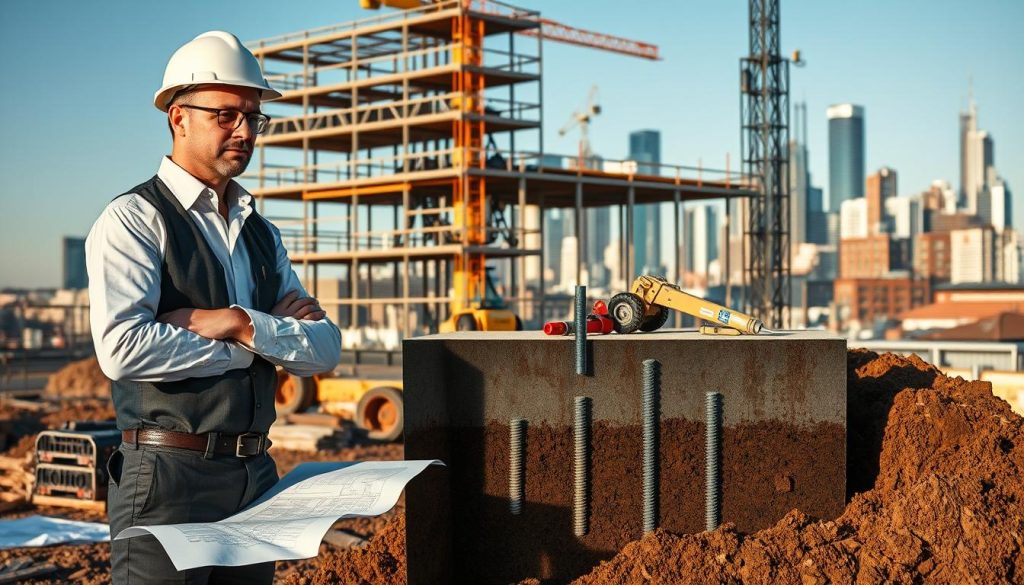
Engineering design to AS 2159 with council‑ready documentation
Our engineers prepare designs to AS 2159 for durability and council approval. We coordinate drawings and reports so approvals proceed smoothly.
Installation with torque monitoring and soil strength logging
During installation we monitor torque and log soil strength below every support. Live software records depth, torque and location for each element.
Installation reports list locations, depths and total metres installed. Static load testing is performed where required and supervised to AS 2159.
Independent certification and clear handover
An independent certifier reviews the works and issues final sign‑off. You receive all documentation for insurers and conveyancers.
Our experts remain available after completion for follow‑up support and advice.
- Free on‑site assessment with honest recommendations.
- Fixed‑price proposal and council‑ready drawings.
- Live monitoring of torque, depth and soil strength.
- Static testing and third‑party certification to AS 2159.
- Clear handover pack for insurance and sale.
| Stage | What we record | Standard |
|---|---|---|
| Assessment | Site photos, movement notes, fixed quote | Free no‑obligation |
| Design | Engineer drawings, load calculations | AS 2159 |
| Installation | Torque log, depth, locations, metres | Live software logging |
| Verification | Static test results, certification, handover pack | Independent sign‑off |
Where screw piles make sense across Sydney projects
We tailor engineered supports to local clays, fills and slopes so your property keeps its value.
Applications suit residential and light commercial work. Houses, extensions, pools and small commercial building works often benefit from fast, deep supports that reduce disturbance.
Residential homes, extensions and additions on reactive clay and sloping sites
Extensions on slopes need careful load transfer to firm strata. We design piers to carry loads through variable ground conditions. That reduces future movement and protects your investment.
Retaining wall support, subfloor ventilation upgrades and wall crack stabilisation
We stabilise wall cracks by fixing the root cause beneath footings. Retaining walls gain capacity with helical anchors and driven supports.
Improved subfloor ventilation lowers moisture and reduces movement risk. Compact equipment suits tight access jobs and limits disruption to gardens and neighbours.
- Sydney’s reactive clays benefit from deep, stable screw pile supports.
- Extensions and additions on slopes need precise load transfer to firm strata.
- Wall crack stabilisation focuses on underlying support, not cosmetic fixes.
- Subfloor ventilation upgrades cut moisture and movement risk.
- Retaining walls and nearby pools can be protected with helical piers and anchors.
- Tight access sites suit compact plant for efficient, low‑impact work.
We serve homeowners and investors across the region. Each job is planned to protect gardens, services and neighbours. You receive clear communication and compliant outcomes that safeguard property value.
Screw piles vs concrete underpinning and resin injection
Different foundation solutions suit different risks — we explain the trade‑offs plainly.
Choosing the right solution for your foundations and building conditions
We assess soil, access and corrosion risk before recommending work. That keeps repairs targeted and compliant.
Screw piling installs faster than concrete piers. It needs less plant, makes no spoil and works in wet weather. Torque control and high tensile steel deliver consistent structural load verification.
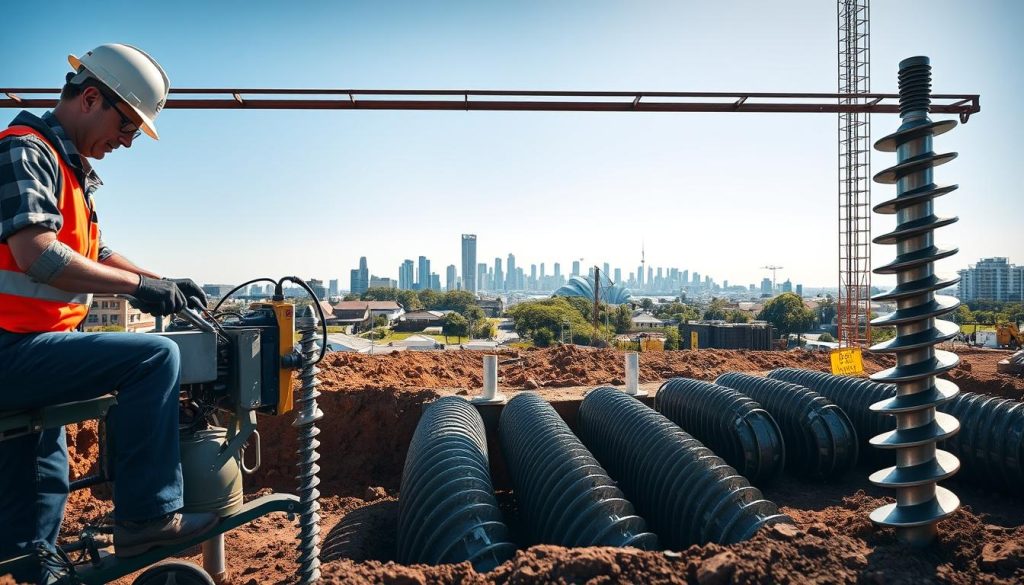
Concrete solutions suit severe corrosion or fire exposure. They may need larger excavations and longer cure times. Concrete piers often require more machinery and truck movements on tight sites.
- Fast, clean and verifiable: screw piles are quick, tidy and checked by torque logs and testing.
- Concrete strengths: better for high corrosion or extreme exposure scenarios.
- Resin limits: resin injection can lift slabs but does not form deep new supports.
| Factor | Screw piling | Concrete piers |
|---|---|---|
| Installation time | Fast, all‑weather | Longer, needs cure |
| Site disruption | Minimal spoil, fewer trucks | Excavation, more spoil |
| Verification | Torque logs, testing | Inspection, load tests |
| Best use | Constrained sites, quick support | Severe exposure, long design life |
We weigh construction time, cost, risk and certification pathways. With 20+ years experience we explain trade‑offs in plain language.
You choose with confidence. We never upsell. Our engineers show the safest, compliant solution for your home or building, and provide clear documentation for approval.
Transparent pricing, fixed quotes and minimal disruption
Our fixed‑price proposals bundle engineering, certification and installation into one clear figure. You get certainty before works start. That reduces stress and avoids unexpected costs.
What influences cost: access, depths, loads and site conditions
Cost varies with access, expected depths and required capacity. We factor corrosion classification and soil conditions into every quote.
Fewer hours on site means less disruption and better value. Skipping spoil removal or concrete pumps can lower your total cost.
Coordinated engineering reports and fixed‑price proposals
Our team coordinates reports, drawings and certification so approvals move smoothly. Installation reports detail pile locations, depths and metres installed.
- Clear inclusions: design, certification and works listed in the quote.
- Logged works: torque and depth recorded so you know what was installed.
- Buying power: Blade Pile master distributors hold stock to 150 kN SWL, helping keep prices competitive.
- Experience saves time: our experience reduces variations and delays on the job.
| Cost factor | Impact | How we manage it |
|---|---|---|
| Access | Affects machinery and hours | Plan compact plant and protect gardens |
| Depth & capacity | More depth raises materials and time | Match each pile to the required load |
| Site conditions | Soil, corrosion and services influence methods | Survey and factor conditions in the fixed quote |
| Disruption | Hours on site and spoil handling | Minimise hours; avoid concrete pumps where possible |
Call 1300 970 930 today to request a fixed quote and coordinated report. For financing options, see our financing options.
Conclusion
A verified design and clear documentation bring lasting certainty to your foundation concerns. We deliver engineered solutions that meet regulations and protect your home.
Screw piles and compact methods give fast, clean support down to firm ground. We document every pile so you can rely on the results.
Our experience and certification process give you peace of mind. We protect your structure, services and landscaping during works and stand behind our compliant design.
Call 1300 970 930 to speak to Chris and book a site inspection. Prefer email first? Send photos for a free preliminary assessment and photo review.