
If you’ve noticed sticking doors or uneven floors, you may be looking for clear, practical advice on what to do next. We explain the most reliable warning signs and what they mean for safety and property value.
We are Underpinning Sydney, structural preservation specialists protecting Sydney homes from structural failure. With 20+ years’ experience we offer free no‑obligation assessments, council‑compliant methods and fixed‑price quotes.
Early detection lowers risk and cost. Horizontal or stair‑step cracks and gaps around frames often indicate deeper movement. Wider than 1/4 inch in masonry can mean urgent concern.
Small tasks you can do include improving surface drainage and sealing hairline cracks. For notable movement, we coordinate engineering inspections and proven repair pathways like concrete underpinning and screw piling.
Call 1300 970 930 to speak to Chris or book a site inspection. Learn more about our approach at Underpinning Sydney.
Key Takeaways
- Early detection reduces repair costs and safety risks.
- Look for horizontal cracks, stuck doors and sloping floors as clear warning signs.
- Minor hairline cracks can be monitored; larger movement needs an engineer.
- We provide council‑compliant repairs and fixed quotes with minimal disruption.
- Free assessments are available — call or send photos for quick feedback.
Why early detection matters for your Sydney home’s structural integrity
Catching structural movement early keeps small problems from becoming expensive, disruptive repairs. Ongoing soil moisture swings, poor drainage and hidden plumbing leaks make foundation issues worse over time.
We protect Sydney homes by prioritising safety and certified workmanship. A timely engineer assessment can distinguish minor cracking from movement that needs stabilisation. Early action usually means less invasive work and shorter site time.
We provide free, no‑obligation assessments and clear, fixed‑price quotes. Our engineer‑led process focuses on evidence, not guesswork. We document findings for insurers and valuers so you can decide with confidence.
- Early detection prevents small defects becoming costly damage.
- Movement often accelerates after heavy rain or drought cycles in Sydney.
- We explain short‑term risk controls you can take immediately and safely.
- Call 1300 970 930 to book a prompt check and avoid future issues.
Signs of foundation failure
Noticing new gaps, warped frames or persistent damp should prompt a careful check. We guide you calmly through what each observation can mean and the next steps to take.
Interior warning cues
Look for diagonal cracks near windows and doors, nail pops and separation at skirting. Sticking doors or stiff sashes often mean frames have distorted. Run a marble test or use a level to confirm slopes in floors.
Exterior red flags
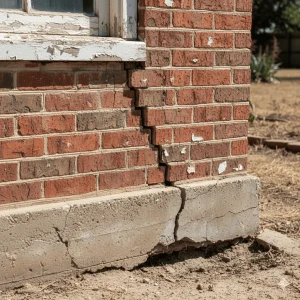
Outside, stair‑step cracking in brickwork and leaning chimneys point to movement. Check for widening gaps around windows, sills and eaves that were once tight. Photograph every finding and note the date.
Moisture indicators
Musty odours, damp subfloors and pooling water around the perimeter increase movement risk. Persistent wet areas change soil loads and can accelerate damage. If several cues appear together, arrange an engineer‑led inspection promptly.
- Document photos and dates for each issue.
- Test floors with a level or marble.
- Contact us for a free photo review and clear guidance on urgency.
How to check your home: a step-by-step inspection guide
A methodical, evidence-led inspection helps you gather facts for timely action. We give a clear engineer-style checklist you can follow safely around your home.
Inside: walls, ceilings, floors, doors and windows
Start indoors. Scan walls and ceilings for new or widening cracks. Check floors with a level and note any slope or soft spots.
- Open every door and window; log stiffness, binding or poor latching.
- Note gaps at skirting, cornices or benchtops pulling away from surfaces.
- Photograph and date each issue for later comparison.
Outside: perimeter, brickwork, retaining walls and roofline
Walk the perimeter. Look for step cracking in brickwork and dips along the roofline.
- Inspect retaining walls for tilt, bulges or staining at weep holes.
- Check for pooling water near the footings; improve drainage if needed.
Subfloor and crawl spaces: ventilation, timber condition and moisture
Enter only if safe. Assess ventilation, timber decay and damp patches under the floor.
| Area | What to check | Action |
|---|---|---|
| Interior | Cracks, door binding, floor slope | Photograph, measure, log for engineer review |
| Exterior | Brick step cracks, roofline dips, pooling water | Improve drainage, mark locations, seek assessment |
| Subfloor | Ventilation, timber rot, damp patches | Temporary drying, consult a pro for repairs |
Record everything with photos and dates. Annual walk-arounds help spot change early and keep your home compliant and safe.
Cracks decoded: hairline vs structural movement
Reading how cracks run gives a quick, practical clue to underlying movement. Patterns, width and change over time tell us whether a repair is cosmetic or urgent.
Vertical, diagonal and stair-step patterns
Vertical hairline cracks under 1/8 inch are often cosmetic. Monitor their length and width for several weeks.
Diagonal cracks at window corners usually mean differential movement. These merit a professional review.
Stair-step cracks in brickwork can point to uneven bearing at the foundation. They suggest deeper ground shift that needs attention.
When widening cracks, bowing walls or nail pops mean action
Bowing or bulging walls indicate excess lateral pressure. Nail pops across many panels show frame distortion and rising risk of major structural damage.
Any crack that admits daylight or moisture demands immediate mitigation. We can coordinate an engineer report and arrange safe rectification.
- Track width: mark cracks with dated tape to spot accelerating movement.
- Send photos: we offer a free initial read before a site assessment.
| Pattern | Likely cause | Recommended action |
|---|---|---|
| Vertical hairline | Surface settlement or shrinkage | Monitor; photograph monthly |
| Diagonal at openings | Differential movement | Engineer review and report |
| Stair-step in masonry | Uneven bearing under walls | Structural assessment and remedial underpinning |
Common causes of foundation issues in Sydney conditions
Across Sydney suburbs, changing moisture and poor site drainage often trigger ground movement. We explain the local causes and simple steps you can take to reduce risk.
Soil movement, drainage and tree roots
Sydney clays expand when wet and shrink in dry spells. This cycle causes uneven settlement beneath footings.
Tree roots make this worse. Roots draw moisture near walls and create drier zones beside wetter soil. That uneven support drives lateral and vertical movement.
Plumbing leaks, erosion and seasonal moisture swings
Hidden plumbing leaks wash fine particles away and weaken bearing capacity. Poor roof and surface drainage concentrates water at the perimeter.
Steep blocks and changed roof catchments can intensify runoff. Seasonal swings — heavy rain then drought — magnify differential movement across a house footprint.
Practical prevention
- Keep gutters and downpipes clear to manage surface drainage.
- Fix leaks promptly and check subfloor dampness regularly.
- Control garden irrigation and trim roots near footings.
- On steep sites consider redirected runoff and retainer checks.
| Local cause | How it affects grounds | Prevention |
|---|---|---|
| Expansive clay | Swells and shrinks, causing uneven settlement | Maintain even moisture, use controlled irrigation |
| Poor drainage | Concentrated water weakens soil bearing | Clear gutters, install downpipe extensions |
| Tree roots | Desiccation near footings; voids form | Root barriers, professional root pruning |
| Hidden leaks | Erosion and loss of fines under slabs | Regular plumbing checks, quick repairs |
We assess both site and structural causes before recommending works. That way you get a targeted, durable solution for your home.
Immediate actions to reduce risk before professional help arrives
While formal assessment is pending, take low-risk steps to protect people and the structure. These actions buy us time and reduce short-term risk to your home.
Do this first:
- Keep people clear of any distorted or bowing elements as a clear warning measure.
- Extend downpipes and create temporary channels to divert roof water away from the perimeter. This helps drainage immediately.
- Avoid heavy watering near footings and do not excavate near footings without advice.
- Gently ease stuck windows and doors; do not force them. Photograph gaps and mark crack ends with dates.
- Check for plumbing leaks and isolate supply if you see unexplained moisture.
What not to do: Do not fill large or active cracks with rigid fillers. Do not carry out major DIY repairs for serious movement. Reduce heavy loads in sloping rooms until we inspect the area.
| Action | Purpose | Caution |
|---|---|---|
| Extend downpipes | Move water away from walls | Temporary fix; arrange permanent drainage |
| Photograph and mark | Track change over time | Include dates; send to our team for review |
| Isolate leaking supply | Prevent erosion under floors | Call a plumber if unsure |
| Keep clear of hazards | Protect occupants | Do not use affected areas until checked |
Call 1300 970 930 to book our free assessment or email photos to Chris. We prioritise safety and a clear next step for your home.
Professional assessment you can trust: engineer-led, council‑compliant
A clear, independent inspection gives certainty about cause, urgency and practical next steps for your home.
Free photo review and triage. Start by sending photos so we can gauge urgency and advise whether an on‑site inspection is needed. This quick step often clarifies the issue before a visit.
On‑site inspection and testing. Our licensed team carries out moisture checks, levelling and frame checks around windows and load points. An independent structural engineer inspects where there is significant concern.
Engineering reports and certification. We coordinate independent engineers who provide council‑compliant reports, drawings and certification. Documentation supports insurers, valuers and prospective buyers.
- Clear scope and staged drawings where required.
- Fixed‑price quotes with no unnecessary upsells.
- We explain options, limits and expected outcomes for your home foundation.
- We manage council liaison and neighbour notifications if needed.
Experienced and insured. With 20+ years’ experience we are licensed and insured. You will not be sold work you do not need; we justify every item in writing.
Book today: Call 1300 970 930 or email photos to speak to Chris for a free, no‑obligation assessment and clear guidance on your home.
Repair and stabilisation options explained
Practical repair choices depend on soil depth, load paths and site access. We select methods that fix the cause and limit disruption to your house and daily routine.
Concrete underpinning for sinking or settling foundations
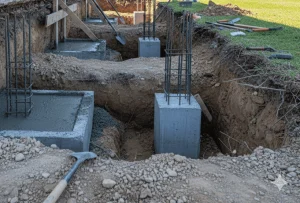
Concrete underpinning transfers load to competent strata. It can recover level and reduce differential settlement with staged pours and shoring.
Resin injection and slab lifting for localised voids
Resin injection fills voids beneath slabs and paths. It restores support with minimal demolition and fast return to use.
Screw piling for deep, stable load transfer
Screw piles bypass weak soil layers to firm strata. They provide long‑term capacity where near‑surface soil cannot carry loads.
Wall crack repairs, subfloor ventilation and retaining wall support
We repair wall cracks with compatible stitching and sealants to restore strength and appearance.
Subfloor ventilation reduces moisture and protects timber floors and joists. Retaining wall support includes anchors, drainage upgrades and relining where needed.
- Concrete underpinning targets sinking zones to restore bearing.
- Resin injection suits small voids with limited access.
- Screw piling offers deep support where soil is unreliable.
- Works are staged to keep your house accessible and dust‑controlled.
- We provide fixed‑price proposals, daily updates and tidy sites.
| Method | When used | Main benefit |
|---|---|---|
| Concrete underpinning | Sinking bays and wide settlement | Restores bearing and re‑levels structure |
| Resin injection | Localised slab voids | Fast, low‑impact slab support |
| Screw piling | Deep weak soils | Long‑term load transfer to firm strata |
| Wall repair & ventilation | Cracked masonry, damp subfloors | Stabilises walls and protects timber |
Safety, compliance and minimal disruption
We plan every job so people stay safe and daily life is disturbed as little as possible. Our methods are engineering‑led and designed for occupied homes.
Licensed, insured and council‑compliant methods
We design and deliver to Australian Standards with independent engineer oversight. All work is fully licensed and insured to protect you and your property.
We manage council notifications and inspections. Certified drawings and as‑built documentation are provided with every project.
Staged works, clean sites and clear communication for peace of mind
Works are sequenced to control movement and protect finishes. Temporary supports and monitoring prevent incidental damage to services.
- Clean, secure sites safeguard families and pets.
- Daily briefings keep you informed and reduce stress.
- We limit vibration and avoid unnecessary separation of finishes.
- Warranties and documentation are supplied on completion.
| Practice | Benefit | Outcome |
|---|---|---|
| Drainage management during works | Prevents further movement | Reduced risk of later damage |
| Staged underpinning or piling | Controls load transfer | Protects finishes and structure |
| Daily updates and monitoring | Clear communication | Peace of mind and timely completion |
Speak to Chris on 1300 970 930 to learn how we manage compliance, timeframes and any urgent warning you may have noticed. We aim to finish on time with minimal disruption.
Costs, consequences and timing: why waiting can be expensive
Delaying repairs often turns small, manageable issues into costly, complex projects. In the short term, fixing drainage and leaks is usually inexpensive. Over time, soil movement and repeated wetting make the problem larger and more intrusive to repair.
Left unchecked, ongoing movement can jam windows and put extra stress on walls and wall linings. Moisture entry accelerates timber decay, invites pests and increases internal damage.
Visible separation and uneven rooms also lower buyer confidence and reduce your house valuation. What began as a local problem can become a multi‑area repair that takes more time and money.
- Delay increases scope: movement worsens, raising repair cost and time.
- Finish repairs follow structural work: windows, plaster and paint often need restoration.
- Moisture speeds damage: timber decay and internal wall damage grow if leaks persist.
- Market impact: separation and unevenness reduce saleability and valuation.
- Soil cycles matter: prolonged moisture swings deepen differential settlement under your house.
We offer engineer‑led scoping, fixed‑price quotes and coordinated reports. That approach controls risk, removes guesswork and helps you plan cashflow. If you notice new warning signs, book an assessment rather than wait.
Call 1300 970 930 to secure a prompt inspection slot and get clear options for timely, cost‑effective foundation repair.
Conclusion
Protecting your home starts with prompt, evidence‑led action when you spot unusual gaps or movement.
We have 20+ years’ experience, are licensed and insured, and deliver council‑compliant, low‑disruption work. We coordinate engineering reports and provide fixed‑price quotes so you know the cost and scope up front.
Monitor crack patterns, check for sticking doors and sloping floors, and control drainage near footings. If multiple issues appear or widths increase, arrange an engineer‑led inspection without delay.
Take the next step: call 1300 970 930 to speak to Chris, book a site visit or email photos for a fast, free assessment. We design durable repair options from concrete underpinning to resin and piles and complete works with clear certification.