
We provide council‑compliant crack repair services and free, no‑obligation structural assessments to protect your property. Call 1300 970 930 to speak to Chris, book a site inspection, or email photos for a rapid preliminary view.
We are Underpinning Sydney, structural preservation specialists with over 20 years’ experience. We stabilise cracked brick or concrete by inserting stainless steel helical bars, then grout to bridge the crack and restore strength.
Our licensed team gives an engineering‑led assessment focused on safety and structural integrity. We deliver transparent fixed‑price quotes, coordinate structural engineering reports, and use minimally invasive methods that preserve appearance and value.
Expect minimal disruption, neat finishes and clear documentation. We explain the technique in plain terms so you feel confident about next steps and compliance with local council requirements.
Key Takeaways
- We offer free, no‑obligation structural assessments and fixed‑price quotes.
- Crack stitching uses stainless steel helical bars to restore strength.
- Licensed team with 20+ years’ experience ensures compliant work.
- We coordinate engineering reports for council compliance.
- Minimal disruption and respect for your home at all times.
Trusted crack stitching for Sydney brick and masonry walls
We provide engineered crack repairs that restore safety with minimal disruption to your home. Our approach focuses on safety, clear pricing and no upselling.
Crack stitching bridges fractures using stainless steel helical bars grouted into horizontal slots. This creates a discreet, strong repair that redistributes tensile loads and preserves appearance.
We reassure anxious homeowners with honest assessments and fixed‑price quotes. Free assessments let us judge damage, access and building context in one visit.
- Stabilises walls using proven crack stitching that resists ongoing movement.
- Minimal demolition: the method addresses cracks in brick and masonry without major work.
- Bars and grout form a continuous bridge across the fracture, protecting structural integrity.
- Discreet finish: repointed joints blend with existing work so your property keeps value.
| Feature | Benefit | Outcome |
|---|---|---|
| Stainless steel bars | High tensile strength and corrosion resistance | Long‑term stability for the structure |
| Cementitious grout | Strong bond with existing masonry | Continuous load transfer across cracks |
| Minimal disturbance method | Low noise, dust control on site | Your home stays operational during repairs |
| Fixed‑price quote | Clear inclusions and timelines | Peace of mind and no surprise costs |
Call 1300 970 930 to book a free inspection and protect your property with an engineered, council‑compliant solution.
What is brick wall stitching and how does it restore structural integrity?
We use stainless steel helical bars combined with a cementitious grout to bridge cracks and restore tensile strength to masonry. The system is an engineered method that creates hidden reinforcement while preserving appearance.
Stainless steel helical bars and cementitious grout explained
The bars are austenitic stainless steel in 4.5, 6 or 8 mm diameters and 1.0–2.0 m lengths. Slots are cut into horizontal mortar beds, cleaned, primed and filled with a HeliBond‑type grout before the bar is pressed in.
How crack stitching redistributes tensile loads across brickwork
By placing bars every 2–6 courses the repair carries tensile forces along the wall. This spreads load away from the fracture and reduces the risk of re‑cracking.
Why stitching outperforms simple crack injection for durability
Injection alone can fill voids but does not add reinforcement. Our method keeps continuous bars and grout that resist movement and corrosion for long‑term performance.
- Slots are typically 25–35 mm deep for cavity walls and 35–45 mm for solid walls.
- Standard slot widths suit the chosen bar diameter (about 10 mm for 6 mm bars).
- Finish includes repointing and colour matching to blend with existing mortar.
| Component | Function | Typical Spec |
|---|---|---|
| Helical stainless steel bars | Provide continuous tensile reinforcement | 4.5–8 mm dia; 1.0–2.0 m lengths |
| Cementitious grout (HeliBond type) | Bond bars to mortar and masonry | Applied as bead, then covered to 10–15 mm from face |
| Horizontal slots | House bars and grout discreetly | 25–45 mm depth; ~10 mm width for 6 mm bar |
We coordinate engineering input where required and provide free assessments plus fixed‑price quotes. For a prompt inspection and compliance advice, visit our inspection page at book a free inspection.
When your home or building needs stitching: causes, signs and risks
Not all cracks are cosmetic — many point to underlying structural issues. We identify common causes quickly and prioritise safety. Early recognition prevents larger problems and higher costs.
Common NSW causes
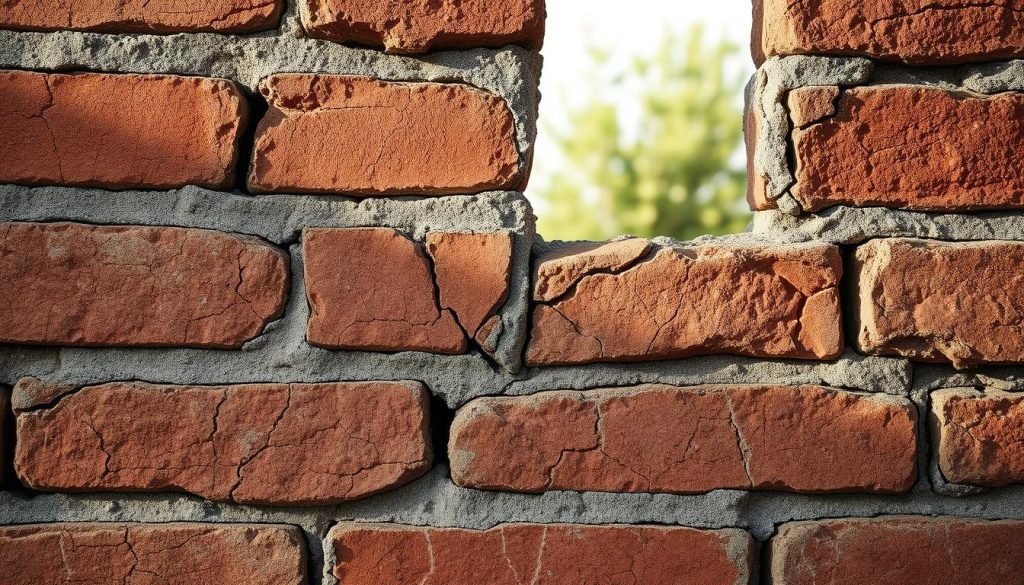
NSW cracking often comes from foundation movement on clay soils. Changes in moisture make foundations swell and shrink.
Thermal expansion, coastal weathering and added loads from renovations also create movement. Poor construction practice can worsen these issues.
Visible symptoms
- Stepped cracks along mortar beds and near lintels.
- Widening joints and fractures at openings and corners.
- Multiple adjacent cracks in brickwork or render.
Risks of delay
Delaying repairs increases damage and safety risk. Early intervention with targeted brick stitching can stabilise walls and protect your home’s value.
| Sign | Likely Cause | Risk if Ignored |
|---|---|---|
| Stepped cracks | Foundation movement | Progressive collapse, higher repair costs |
| Widening joints | Moisture cycles | Water ingress and material decay |
| Corner fractures | Added loads/poor lintels | Window/door failure, reduced safety |
We assess the underlying structural issues before recommending repairs. Book a free inspection and get a fixed‑price quote so you can make an informed choice about the next step for your home.
Our compliant crack stitching method: engineered, minimal‑disruption repairs
Our process delivers council‑compliant reinforcement while keeping noise, dust and disturbance to a minimum. We coordinate engineering reports and provide a clear scope and fixed pricing so you know what to expect.
Assessment and engineering report coordination
We start with a site assessment and arrange any required structural reports. This ensures council compliance and an engineered repair strategy.
Raking mortar beds and preparing clean slots
Horizontal mortar beds are raked or cut at least 500 mm past the crack. Slots are cleaned, primed or wetted, and prepared to the specified depth for your wall type.
Placing helical bars and bonding with HeliBond grout
We inject a bead of HeliBond‑type grout, press austenitic helical bars into the wet grout, and overlay with grout finished 10–15 mm from the face. This creates a continuous reinforcement that restores tensile integrity.
Depths, spacing and bar sizes
Typical slot depths are 25–35 mm for single skin or cavity construction and 35–45 mm for solid masonry. Bars are 4.5–8 mm dia in 1.0–2.0 m lengths. Vertical spacing follows engineering guidance (every 150–450 mm).
Finishing and detailing
We repoint mortar beds, weatherproof vertical cracks with an epoxy such as Crackbond TE, and colour match finishes. At corners and openings we bend bars at least 100 mm into the return. For multiple adjacent cracks we use a continuous length extending 500 mm beyond the outer fractures.
- Low disruption: techniques minimise dust and noise.
- Documented compliance: you receive reports for council and records.
- No upsell: fixed pricing and clear inclusions.
Call 1300 970 930 to speak to Chris about engineered crack stitching and fixed‑price options.
brick wall stitching sydney: transparent pricing and fixed‑price quotes
Transparent quotes remove guesswork and help you plan repairs with confidence.
Typical Sydney price guidance per metre and what’s included
Typical pricing ranges from $250 to $500 per metre. This covers helical bars, grout, labour and neat repointing for most common repairs.
Higher costs apply for difficult access, height work or complex damage. Larger scopes usually reduce the per‑metre rate through efficiencies.
Cost variables: severity, access, height, heritage and scope efficiencies
We offer free no‑obligation assessments and fixed‑price quotes. No upselling. Minimal disruption.
- Expect clear fixed‑price quotes with itemised inclusions before work.
- Typical pricing covers bars, grout, labour and mortar repointing.
- Access constraints and height can increase setup and safety costs.
- Heritage materials and colour matching require extra care and time.
- Larger runs reduce per‑metre pricing through economies of scale.
- We schedule works to minimise time on site and disruption.
- Quotes flag risks, provisional items and assumed access; we can supply photos and drawings.
Call 1300 970 930 to secure your property and control costs, or book a free inspection for a precise professional quote.
Integrated solutions beyond stitching: permanent fixes for recurring cracks
Recurring cracks need more than a patch — they need a coordinated, permanent fix. We combine discreet reinforcement with ground and moisture control to stop return damage.
When to choose crack injection vs crack stitching
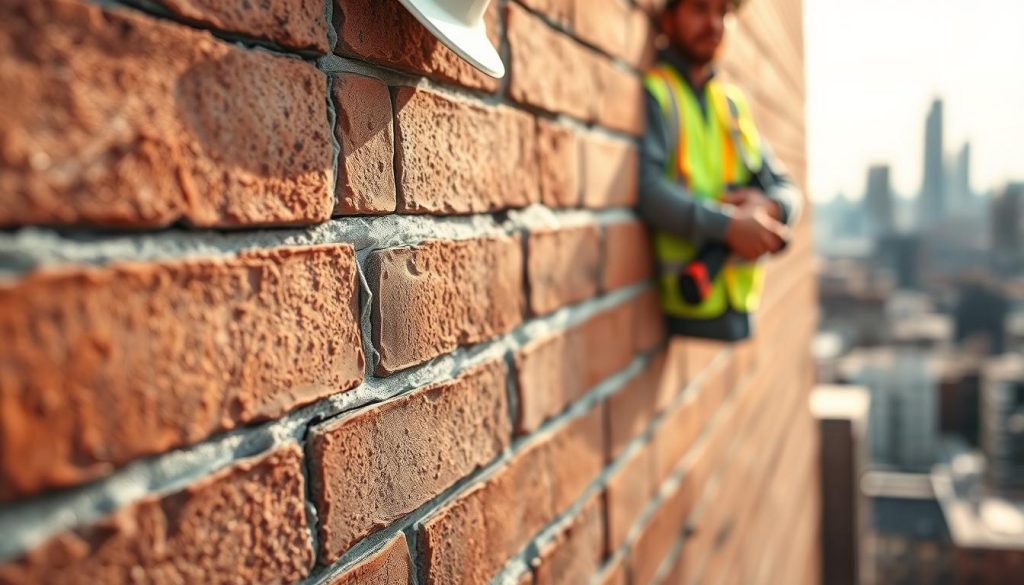
Crack injection is the right solution for fine, non‑structural cracks. It seals and restores appearance quickly.
Crack stitching suits structural fractures where added reinforcement is required. It restores tensile strength and durability.
Stabilising the cause: underpinning, resin and screw piling
Where movement comes from ground instability, we use concrete underpinning, resin injection or screw piles. Each method stabilises foundations and protects your building long term.
Moisture and movement control
Moisture control through subfloor ventilation and retaining support reduces soil reactivity and future movement. Combined, these services treat both symptoms and root causes.
| Issue | Short‑term fix | Permanent solution |
|---|---|---|
| Fine non‑structural crack | Crack injection | Seal and monitor |
| Structural fracture | Temporary repairs | Crack stitching + underpinning |
| Ground movement | Monitoring | Resin or screw piling |
Our approach aligns with engineering advice and council requirements. You get one team managing cause and repair, honest assessments, no upselling and fixed‑price quotes. Book a free assessment to choose the right solutions for your property.
Why homeowners and strata choose Underpinning Sydney
Homeowners and strata managers choose us because our team combines practical know‑how with clear, documented processes.
20+ years’ experience, fully licensed & insured, council‑compliant methods
We bring over 20 years’ experience delivering engineered repairs. Our licences and insurance cover every job and meet council standards for compliant work.
Honest assessments, no upselling and minimal disruption on site
We provide free assessments and fixed‑price quotes. Our approach is transparent and focused on value and integrity.
We coordinate engineering reports and supply full documentation for strata managers and insurers. This supports maintenance records and approval processes.
- Seasoned team trusted across local areas and buildings.
- Fully licensed, insured and council compliant.
- Transparent approach with no unnecessary extras.
- Clean, efficient site practices to minimise disruption.
- Clear scopes, timing and safety controls before work starts.
- Engineering report coordination to streamline approvals.
- Documentation that supports strata and insurer requirements.
- Workmanship backed by warranty processes.
- Speak directly with Chris for advice and scheduling.
Crack repair using stainless helical bars and cementitious grout is a proven, permanent method when installed to specification.
Call 1300 970 930 to book a free assessment today or learn about our underpinning options at traditional concrete underpinning.
Areas we service and building types
We work across the full range of building types to deliver discreet reinforcement and minimal disruption. Our teams cover metropolitan and outer suburban areas, responding fast to protect your property.
Residential homes, heritage masonry, strata and commercial buildings
We repair houses, townhouses and apartments. We stabilise heritage masonry with sympathetic, reversible methods that respect original fabric.
We support strata managers with staged, documented programmes. For commercial buildings we plan works to avoid interrupting operations.
- We service the CBD, Inner West, Eastern Suburbs and North Shore.
- Our team also covers Western Sydney, Hills District and Sutherland Shire.
- Services scale from single crack repairs to full façade packages.
- Send photos for a quick preliminary view and book a site inspection for a fixed quote.
| Building type | Typical issue | Our services |
|---|---|---|
| Residential homes | Stepped cracks, settled openings | Helical reinforcement, repointing, monitoring |
| Heritage masonry | Age, mortar decay | Reversible methods, colour match, engineer reports |
| Strata & apartments | Façade cracking, safety access | Staged programmes, documentation for managers |
| Commercial buildings | Facade damage, tenant impact | Discrete repairs, work scheduling to limit disruption |
Contact us with photos for a fast preliminary assessment. Book an inspection to secure your building and manage damage before it worsens.
Conclusion
Our conclusion is simple: choose a tested, engineered repair that restores strength and limits disruption.
We use stainless steel bars and grout set into prepared mortar beds to bridge cracks in brickwork and masonry. The method includes raking slots, priming or wetting, seating bars, overgrouting and neat repointing.
This approach treats the problem, reduces future cracking risk and keeps finishes discreet. You get documented, council‑compliant works and a fixed‑price repair plan tailored to your property.
Call 1300 970 930 to speak to Chris, book a site inspection or book a free inspection. Email photos for a fast preliminary view and scheduling.