
If you are searching for clarity on buying a house that has been underpinned, we will guide you through what matters most for safety and value.
We are Underpinning Sydney. With 20+ years’ experience, we protect Sydney homes from foundation failure. We are fully licensed and insured and use council‑compliant methods.
Proper underpinning resolves many cases of subsidence and restores structural integrity when done to engineering standards. Lenders and insurers usually accept a property with clear permits, inspection records and a completion certificate.
We offer free, no‑obligation structural assessments, fixed‑price quotes and engineering report coordination. Our approach is calm and engineering‑led, with minimal disruption and no upsell tactics.
In this guide we explain the exact documents buyers should check, the common Sydney soil movements, and red flags to avoid. You will gain practical steps to reduce risk and improve mortgage outcomes.
Key Takeaways
- Verify engineer design, building permit and inspection records before exchange.
- Correct underpinning typically stops subsidence and reassures lenders.
- Ask for reputable contractor history and warranty insurance for works over $16,000.
- We provide fixed quotes, site checklists and coordinated engineering reports.
- Look for no permits or cosmetic patching as strong red flags.
Buyer’s Guide overview for Sydney homeowners worried about foundations
This buyer’s guide gives Sydney owners clear steps to assess foundations and reduce subsidence risk.
We explain how subsidence begins and why early, engineered repairs matter. You get calm, practical advice on what to check and which questions to ask.
- Assess a property with confidence and compare similar properties.
- Gather key documents: engineer design, permits and completion certificates.
- Spot typical Sydney risks: clay shrinkage, coastal sands, drainage and tree roots.
- Know when to call a structural engineer and what certification should include.
Quality underpinning often lasts decades if the cause is fixed and maintenance is managed. We summarise how mortgage assessors view compliant, engineered repairs and offer clear next steps.
For tailored help, see our site inspection service and reports at Underpinning Sydney.
What underpinning is — and how it differs from an active subsidence issue
A clear diagnosis by an engineer tells whether underpinning will fix the problem or if more work is needed.
Underpinning is an engineered method to stabilise and support existing foundations. It increases footing support so the structure stops moving.
Causes of movement in Sydney soils and how engineers diagnose them
Sydney issues often stem from clay shrink‑swell, leaking drains, tree roots or nearby construction. Coastal sands can wash away with poor drainage.
Engineers inspect the soil profile, check drainage and plumbing, and monitor crack patterns and floor levels. This diagnosis identifies whether subsidence is active or historic.
When underpinning restores structural integrity versus when further remediation is needed
If the cause is fixed and footing support is increased, underpinning usually restores structural integrity for decades.
If movement continues, remedial works such as drainage upgrades, deeper supports or repair to services may be required before or alongside underpinning.
- Key check: engineer design and inspection records.
- Watch for: ongoing cracks or fresh settlement after works.
| Issue | Engineer check | Likely method | Outcome |
|---|---|---|---|
| Clay shrink‑swell | Soil profile & moisture history | Concrete underpinning with moisture controls | Stability if moisture source fixed |
| Leaking drains | Plumbing and subfloor inspection | Drain repair + underpinning or observation | Resolved when leaks cured |
| Scouring sand | Ground compaction & drainage | Deeper supports or piling | Requires deeper construction for lasting fix |
| Active movement | Monitoring & level surveys | Hold works until stable; remediate causes | Safe underpinning once movement stops |
Buying a house that has been underpinned: what to verify before you commit
Confirm the paperwork first. You want clear proof the underpinning work was engineered, permitted and inspected. This gives you safety and speed with lenders and conveyancers.

Essential documents
Request the engineer’s design and calculations for the underpinning work. These show the method and load assumptions used.
Confirm a valid building permit was issued and inspections occurred at key stages. Sight the completion certificate and any final inspection or occupation records.
Who did the work and when
Check the contractor’s history and whether the company is licensed for structural building work. Ask for warranty insurance details for jobs over $16,000 and read the terms.
Ensure the structural engineer signed off the final outcome and that foundations, drainage and plumbing repairs were addressed where required.
Red flags to avoid
- Undocumented repairs or cosmetic patching with no engineering record.
- Missing permits or no staged inspection records.
- Methods inappropriate for local soils or load conditions.
| Check | Why it matters | Action for the buyer |
|---|---|---|
| Engineer design | Shows the underpinning work met structural requirements | Obtain copy and give to your conveyancer |
| Building permit & inspections | Confirms council oversight and staged approvals | Verify dates and inspector sign‑offs |
| Warranty insurance | Protects against contractor default on major works | Request certificate and policy terms |
We provide honest, straightforward site checks and coordinate engineering reports so you can buy with confidence. Give this file to your lender to streamline mortgage approval.
Due diligence checklist on site and on paper
Start with a practical checklist that links what you see on site to the paperwork behind the work.
Site observations
Walk the property. Note crack patterns and measure widths if possible.
Check floor levels, doors and windows for binding or misalignment. Inspect retaining walls and subfloor ventilation.
Look for moisture, timber decay or fresh patches that could hide ongoing movement.
Soil and services
Review the soil type and ground drainage. Mark nearby trees and any root zones.
Ask about plumbing repairs and look for signs of leaking drains. Request local drought and flood history to assess movement cycles.
Engineering sign-off
Obtain the scope of works and current structural certification for the house. Confirm the ground conditions matched the engineer’s assumptions.
Verify monitoring data such as crack gauges or level surveys. If evidence conflicts with documents, seek expert advice.
- Keep a neat file for your conveyancer, insurer and tenants.
- We coordinate engineering reports and provide fixed‑price quotes after assessment.
- Practical advice is to prioritise safety, compliance and longevity when reviewing records.
| Check | What to look for | Action |
|---|---|---|
| Crack patterns | Widths, recurrence, recent repairs | Photograph and obtain engineer comment |
| Soil & drainage | Clay presence, pooling, tree roots | Match site notes to engineer assumptions |
| Certification | Scope of works and sign-off | Give copies to your conveyancer and lender |
Finance and insurance: how lenders and insurers view an underpinned house
Mortgage and insurance approvals move faster when underpinning work is certified and transparent. Lenders and insurers favour clear engineering sign‑off, permits and completion certificates. This reduces uncertainty about long‑term risks to the property.
Mortgages: why compliant underpinning reassures banks
Banks look for proof the structural issue was fixed and certified. Mortgage assessors expect permits, staged inspections and the engineer’s final sign‑off.
Lenders are cautious where records are missing. Undocumented building work often slows or denies loan offers.
Insurance policies: disclosure, premiums and subsidence history
Insurers ask about subsidence history and the repairs undertaken. Full disclosure and documents often improve cover terms and reduce premium surprises.
Expect questions on scope of works and any monitoring that followed the repair.
- Provide a concise pack of engineer reports, permits and completion certificates to speed mortgage approval.
- Lenders and insurance underwriters favour council‑compliant methods and long‑term monitoring data.
- Compliant underpinning preserves value by removing uncertainty and lowering perceived risks.
- We coordinate engineering reports that satisfy lending and insurer criteria and help you answer targeted queries.
| What lenders/insurers want | Why it matters | Action |
|---|---|---|
| Engineer sign‑off | Confirms structural standards met | Include certificate with your file |
| Permits & inspections | Shows council oversight | Obtain copies from vendor or council |
| Subsidence history | Informs policy and premiums | Disclose repairs and monitoring |
Does underpinning affect property value in Australia?
When foundation work is engineered and certified, market confidence in a property rises.
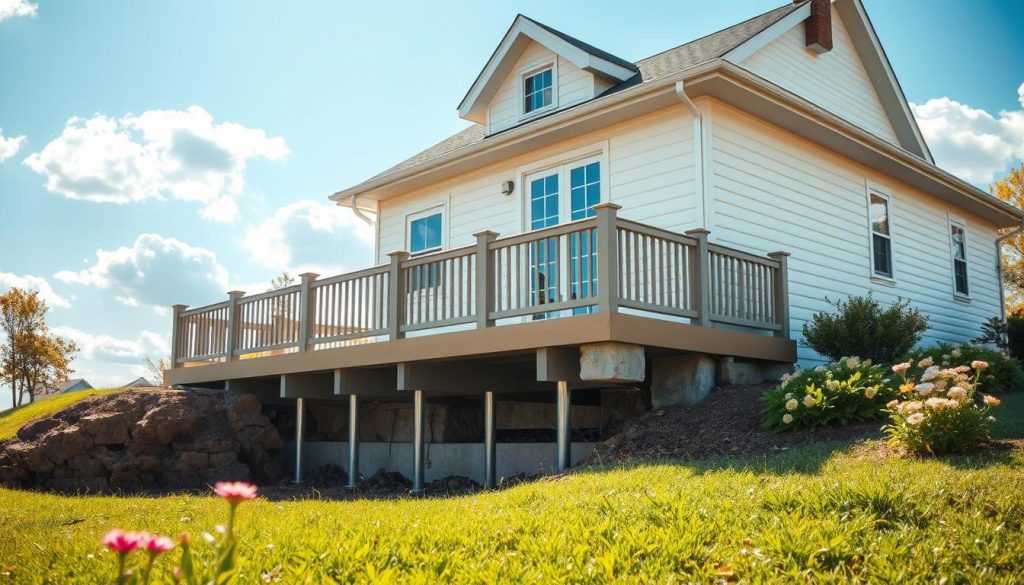
Compliant underpinning protects value. Proper design, council permits and final sign‑off reassure buyers and lenders. This usually preserves or restores price and makes mortgage approval smoother.
Undocumented or unpermitted repairs do the opposite. Missing records create doubt. That doubt can reduce price and delay settlement.
When compliance protects value — and when it does not
- Value is protected when the design, permit, inspections and completion certificate are on file.
- Buyers gain confidence with a clear building file and warranty evidence.
- Unpermitted work or no history of subsidence resolution can depress price and complicate sales.
- Active subsidence usually lowers value until a permanent fix is certified.
| Factor | Effect on sale | Action |
|---|---|---|
| Engineering sign‑off | Improves buyer trust | Include certificate with the file |
| Permits & inspections | Simplifies mortgage approval | Provide to your lender |
| Maintenance evidence | Supports long‑term value | Show drainage and monitoring records |
For a confident sale or purchase, prepare a clean file and talk to us. If you need help assembling documents, contact us for a site check and report.
Underpinning methods explained: concrete underpinning, resin injection and screw piling
We describe three proven foundation approaches and the situations where each performs best. Each method restores stability when engineered and verified. We favour the least disruptive, council‑compliant option for your property.
Engineer‑designed concrete underpinning
How it helps: Concrete underpinning increases bearing and stiffness beneath existing footings. Engineers design staged pours and inspections so the work meets council rules.
It suits clay soils and most conventional foundations. Expect solid, long‑term performance when moisture and drainage causes are fixed.
Resin injection: fit, limits and compliance
How it helps: Resin injection expands in the ground to densify soils and fill voids. It can be quick and cause minimal disruption to the house.
Resin is suitable where loads and soil types match the method used. Compliance depends on scope; engineers must confirm suitability before work proceeds.
Screw piling for deeper support
How it helps: Screw piling transfers loads to deeper, stronger layers when shallow ground is unreliable. It is the safer choice on difficult sites or where greater capacity is needed.
Access, heritage and service lines affect choice. We select the method based on investigation, not convenience, and certify all work.
| Method | How it works | Best for | Notes |
|---|---|---|---|
| Concrete underpinning | New concrete supports under existing footing | Clay or traditional foundations | Engineer design, staged inspections, long lifespan |
| Resin injection | Polymer injected to fill voids and densify soil | Localised voids and light loads | Low disruption; suitability must be engineered |
| Screw piling | Steel piles screwed to deeper strata | Weak near‑surface ground or high loads | Deeper solution; minimal vibration; council approval often required |
How Underpinning Sydney safeguards buyers: honest assessments, minimal disruption, certified outcomes
We focus on transparent reports, practical repairs and council‑compliant work so you can proceed with confidence.
Our services
We deliver engineered underpinning, resin injection and screw piling across Sydney. Our team also handles wall crack repairs, subfloor ventilation and retaining wall support.
- We coordinate structural engineering reports and certification.
- We plan works to limit disruption to your home and neighbours.
- Our crew is fully licensed, insured and follows council requirements.
What you can expect today
Book a free, no‑obligation structural assessment and receive a transparent, fixed‑price quote.
We provide clear timelines, an itemised scope of work and help prepare a finance‑ready file for your mortgage or insurer.
Next steps
Send photos for a preliminary review or call 1300 970 930 and speak to Chris to book a site inspection.
| Service | Benefit | Timing |
|---|---|---|
| Wall crack repairs | Restores finishes and records for lenders | 2–5 days |
| Subfloor ventilation & drainage | Stops moisture drivers of movement | 1–2 weeks |
| Engineering reports & certification | Streamlines mortgage and insurance approval | 3–10 days (coordination) |
We give honest advice, no upsell, and a permanent, council‑compliant solution for your home. Call us today to get started.
Conclusion
Conclusion
A careful file of permits, engineer reports and inspection notes turns uncertainty into confidence for buyers. Compliant work, with clear certification, reassures lenders and insurers and speeds mortgage approval.
Confirm the engineer’s sign‑off, review the scope of works and check site signs of ongoing movement. An underpinned house with full records is a safer way to buy and usually performs for decades when causes are fixed.
Practical next steps: gather documents, engage a structural engineer to validate foundations and maintain drainage, tree and plumbing controls. For expert advice or a site inspection, call 1300 970 930, speak to Chris, or email photos to book your inspection.