
We stabilise and protect your house with engineered solutions you can trust. Contact us on 1300 970 930 to speak to Chris, arrange a site inspection, or send photos for a preliminary assessment.
We are Underpinning Sydney — structural preservation specialists with 20+ years’ experience. We assess cracks in walls, jammed doors, uneven floors and ground movement, then recommend a clear, council-compliant solution.
Our approach is calm and methodical. We explain the cause, whether reactive soil or poor drainage, in plain language. You get a fixed-price quote, an engineering report and minimal disruption during work.
We use proven methods — concrete underpinning, resin injection, screw piling and targeted wall crack fixes — chosen for your foundation and site access. Safety, insurance and compliance guide every step.
Key Takeaways
- Free no-obligation structural assessments and clear, honest findings.
- Engineered solutions to protect your home and preserve property value.
- Minimal disruption with modern techniques and tight site control.
- Council-compliant methods overseen by structural engineers.
- Fixed-price quotes and coordinated certification for insurance and compliance.
- Call 1300 970 930 to speak to Chris about next steps.
Underpinning Sydney: calm, certified subsidence specialists protecting your home
Calm, certified and accountable: we deliver underpinning solutions tailored to each home.
We are a licensed, insured team with over 20 years’ experience protecting houses across Sydney. We speak plainly and act decisively. Our mission is to protect families and property with safe, engineered methods that minimise disruption.
Common issues we address include cracked walls, sticking doors and uneven floors caused by ground movement.
We prioritise low‑impact options such as targeted injections. Small access points cut time on site compared with large excavations.
- Engineering oversight: documented methodology for council and insurance needs.
- Site care: work planned to keep your house liveable.
- Clear steps: we explain risks, controls and the timeline before work starts.
| Method | Impact on site | Typical use |
|---|---|---|
| Resin injection | Low — small holes | Rapid re‑levelling, limited access |
| Concrete underpinning | Moderate — excavation | Deep bearing when required |
| Screw piling | Low to moderate | Transfer loads to stable strata |
Speak to Chris to book a site inspection and get a transparent plan that protects your structure and gives real peace of mind.
Subsidence Repair Sydney — fast, compliant help when your foundations move
A fast, compliant response makes the difference when your home shows signs of movement. We offer a free, no‑obligation structural assessment to confirm causes and limit further damage.
Our engineer-led assessment sets the right course for your foundation. We explain whether a resin injection approach or traditional underpinning suits your building.
Fast-curing resin often restores levels in hours. Small keyholes mean minimal downtime and quick return to normal use.
- We triage issues quickly to reduce damage risk and take immediate steps.
- You receive a fixed-price quote based on your needs and the site constraints.
- Where deeper bearing is required, we plan compliant underpinning or screw piles with clear safety controls.
- We outline expected time on site, temporary requirements and any likely cost before work begins.
You can often stay in the house while we stabilise and re-level floors. Call 1300 970 930 to book a site visit or email photos for a preliminary cost guide.
Clear signs of subsidence to watch for in Sydney homes
Simple changes inside your home can reveal underlying ground movement before the issue worsens. We explain what to look for so you can act early and protect your property.
Cracks near openings
Watch for stepped, diagonal or widening cracks in walls around doors and windows. Hairline splits can grow over weeks or months.
Uneven floors and sticking doors
Feel for dips or sloping rooms. Doors that drag or stick are an early, practical clue to uneven floors and hidden movement.
Gaps, jammed windows and ceiling lines
Look for gaps at skirtings or between ceilings and wall linings. Jammed windows or warped frames often show change in the wall plane.
Leaning masonry and sinking slabs
Check external brickwork for leaning, bulging mortar joints or sinking concrete slabs. These signs point to movement of the ground under the foundation.
- Track changes with dated photos and simple measurements.
- Early assessment reduces risk and limits the scale of any future works.
- Contact us for a free, no‑obligation assessment and clear advice for your house.
| Indicator | What to check | Why it matters |
|---|---|---|
| Wall cracks | Near doors, windows, corners | Can show differential movement |
| Uneven floors | Slopes, dips, doors sticking | Shows foundation tilt or settlement |
| Exterior masonry | Leaning, mortar gaps, sunken slabs | External sign of ground change |
What causes subsidence in Sydney’s soil conditions
When the ground beneath a house moves, it is rarely a single cause. We look for a mix of soil, moisture and biological factors that create the problem.
Reactive clay shrink‑swell, moisture loss and tree roots
Reactive clay shrinks in dry months and swells after rain. That seasonal cycling stresses footings and creates visible signs on walls and floors.
Large trees near footings can draw moisture and speed settlement. We test moisture profiles and recommend controls to stop ongoing movement.
Poorly compacted fill, erosion and drainage issues
Poorly compacted fill will settle over years and cause uneven movement. Leaking pipes and poor drainage wash out fines and form voids under slabs.
- Reactive clays change volume with moisture.
- Poor fill compacts and causes differential movement.
- Leaks and erosion remove support beneath footings.
- Sloping sites can lose ground through washouts.
We diagnose the underlying cause, not just the symptoms. Where needed, we pair structural underpinning with drainage and moisture controls. This stops the cause and protects your property for the long term. For more on reactive clay behaviour see reactive clay soil problems.
Our stabilisation methods: concrete underpinning, resin injection and screw piling
We offer all major methods and explain the trade-offs so you can choose the right solution for your house.
Each approach is matched to your foundation, soil profile and building layout. We select the technique that meets your needs, budget and compliance requirements.
Resin injection ground improvement for rapid re-levelling
Resin injection uses tiny keyholes, typically 6–16 mm, to place expanding resin beneath footings. The material fills voids and improves ground bearing quickly.
Benefits: fast cure times, minimal holes, short time on site and rapid re-levelling of floors.
Traditional underpinning where deeper bearing is required
Concrete underpinning involves excavating beside footings and pouring new concrete pads to transfer loads deeper. It suits buildings needing deeper bearing capacity.
This method requires excavation and curing days, but provides a robust, long-term foundation solution when surface soil is unreliable.
Screw piles to transfer loads to stable strata
Screw piling transfers loads to competent layers well below shallow soil. It works where access limits excavation or deep bearing is needed.
Install times are efficient and disturbance is low. Each pile is engineered to suit the building load and ground conditions.
- We assess foundation, soil profile and building layout before recommending a method.
- Tiny holes and fast-curing resin reduce disruption for many homes.
- Concrete underpinning is chosen when excavation and deeper bearing are required.
- Screw piles suit access-limited sites and deep bearing needs.
- All methods follow Australian standards with engineering oversight and clear safety controls.
- You receive a fixed, transparent scope that protects your home and meets compliance requirements.
| Method | Impact | When used |
|---|---|---|
| Resin injection | Low — small holes, quick cure | Rapid re-levelling, void filling |
| Concrete underpinning | Moderate — excavation, cure time | Deep bearing where needed |
| Screw piling | Low to moderate — minimal excavation | Transfer loads to stable strata |
Resin injection vs traditional underpinning: choosing the right method
Choosing between resin injection and traditional underpinning starts with a clear look at your ground, access and expected outcome.
Tiny keyholes, fast curing and minimal disruption
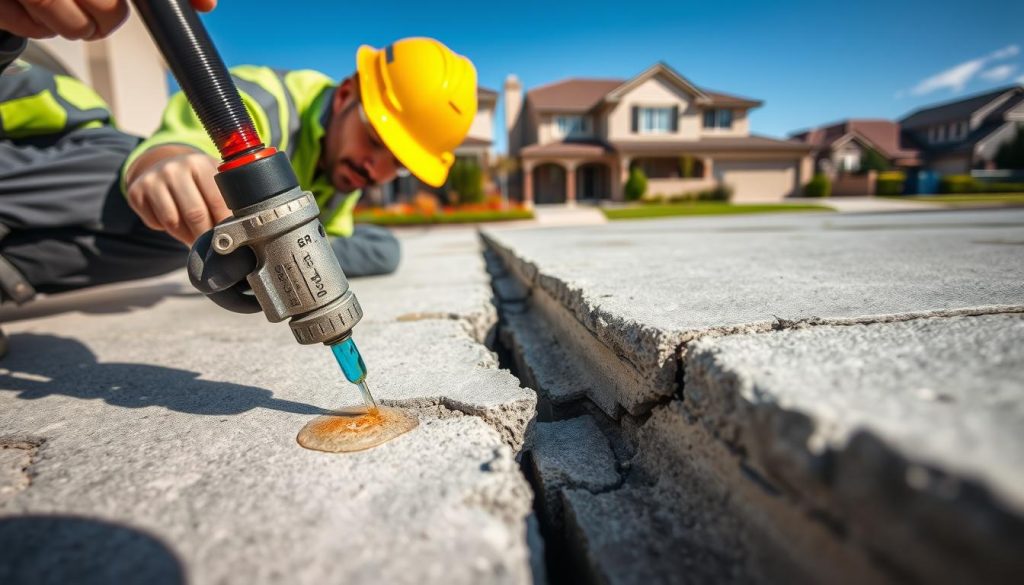
Resin injection uses tiny keyholes, typically 6–16 mm. The expanding resin fills voids and improves bearing quickly.
Most injections cure in about 30 minutes. That often returns rooms to service the same day. This method is clean, quiet and keeps neighbours happy.
Excavation, curing times and access impacts with concrete
Traditional underpinning needs excavation, spoil removal and concrete placement. Curing takes days and can affect gardens and paths.
Costs vary with depth, access and site constraints. We compare cost, time, access and long‑term performance for your ground and soil.
- Resin injection: small holes, fast return to use, low disruption.
- Traditional methods: deeper work, longer cure, greater site impact.
- We assess utilities, adjacent buildings and risk controls before any process begins.
- We remain method‑neutral and recommend what best manages your subsidence risk and value.
| Criteria | Resin injection | Traditional underpinning |
|---|---|---|
| Impact | Low — small holes | Moderate — excavation |
| Time on site | Short — hours | Longer — days |
| Best for | Void filling, quick level | Deep bearing, unstable soil |
Our engineering-led process for safe, lasting repairs
Our engineer-led process ensures every step is planned, documented and delivered. From inspection to handover, we coordinate tests, consent and on-site controls.
Free no-obligation structural assessment
Step 1 is a focused assessment of safety and the extent of movement. We check structure, foundations and visible cracks.
Soil and structure diagnostics, honest recommendations
Step 2 uses soil tests and structural diagnostics to define risk and method. We explain whether a resin injection, underpinning or screw pile approach suits your ground.
Fixed-price quote and council-compliant methodology
Step 3 gives a fixed-price quote and a council‑compliant method statement. We stage work where needed to limit disruption to your site and household.
Quality assurance, certifications and handover
Step 4 is execution by our licensed team with engineer oversight and QA checks.
Step 5 covers certification, as-built documentation and a tidy site handover so you finish with clear records and warranty.
- We manage utilities, stakeholder communication and site safety.
- We guide you through clear steps and honest recommendations.
| Phase | What we do | Outcome |
|---|---|---|
| Assessment | Visual check, measurements | Scope and safety plan |
| Diagnostics | Soil tests, structural review | Method selection (resin or underpinning) |
| Execution | Licensed team, engineer oversight | Safe, staged work and QA |
| Handover | Certification, as-built docs | Compliance and peace of mind |
Wall crack repairs and re-levelling that restore structural integrity
Cracks in masonry often tell a deeper story about how a building carries its load.
We stabilise the cause first. That means consolidating the ground or providing underpinning where deeper bearing is needed.
Masonry stitching, mortar replacement and controlled lift
Controlled lift during a resin program can close cracks and re-align doors. We use measured lifts so finishes and frames are protected.
After re‑support, we stitch masonry, replace damaged mortar and match textures. This restores appearance and load paths.
- We repair cracks only after the foundation is stabilised to prevent recurrence.
- Resin injection can consolidate voids before cosmetic work begins.
- Where required, underpinning secures deep bearing prior to wall works.
- Work is sequenced to limit dust, vibration and impact on your home.
| Technique | Primary benefit | Typical use |
|---|---|---|
| Masonry stitching | Restore continuity of walls | Vertical and stepped cracks |
| Controlled lift | Re-align openings and close gaps | Doors and window frames out of plumb |
| Resin injection | Ground consolidation, quick lift | Void filling and small settlements |
| Underpinning | Deep bearing capacity | Extensive foundation damage |
We provide clear guidance on monitoring after works. Small checks help you spot any future movement early and protect value.
Subfloor ventilation and moisture control to prevent future movement
Poor ventilation and surface water are common causes of ground moisture swings beneath homes. We treat moisture as the primary cause to reduce movement in reactive soil and timber floors.
Prevention matters. Adequate subfloor airflow reduces damp, mould and timber movement in floors. Good drainage limits the soil changes that drive shrink‑swell.
We design practical solutions that suit your property and access constraints. Where structural work is needed, we coordinate ventilation upgrades with underpinning or targeted polyurethane injection.
- Adequate airflow protects timber and the foundation.
- Improved surface falls, gutters and downpipes reduce moisture variation.
- We provide a maintenance plan to help prevent recurrence and reduce lifecycle costs.
| Issue | Action | Benefit |
|---|---|---|
| Poor subfloor airflow | Install vents or mechanical extract | Less damp, reduced timber movement |
| Surface water and poor falls | Regrade, repair gutters and downpipes | Stable ground moisture near slab |
| Reactive soil conditions | Combine drainage with ground improvement | Longer lasting foundation and fewer future repairs |
We protect your house early. Moisture control supports long‑term performance and safeguards your property’s value.
Retaining wall support and ground improvement on sloping sites
We treat retaining walls and their soils as part of the home’s foundation system, not as an afterthought.
On slopes, erosion and poor drainage can undermine the ground behind a wall. That loss of support can lead to cracks, displacement and risk to the main structure.
We assess the wall, drainage and slope stability as a single plan. Then we decide if ground improvement, injection or concrete elements are required.
- Ground improvement strengthens soils behind walls and reduces ongoing movement.
- Targeted injection fills voids and improves bearing beneath footings.
- Concrete or piled solutions suit higher loads or constrained access.
- We manage access, staging and safety on steep sites and plan work to suit weather.
| Issue | Typical action | Benefit |
|---|---|---|
| Poor drainage | Install drains and regrade | Less soil washout |
| Voids under footings | Resin injection or grout | Restore bearing |
| High loads | Concrete pads or piles | Long-term support |
We stabilise first, then make surface repairs. Our priority is to protect your house and its foundation with staged, engineered work.
For details on small‑hole consolidation see resin injection underpinning.
Structural engineering reports coordinated for compliance and insurance
We turn complex investigations into clear, usable documentation for your property file. Our process makes council and insurer requirements simple to follow.
Design sign-off, certifications and documentation
We organise engineering inspections and produce reports that insurers and councils accept. Reports include investigation findings and soil and foundation data.
Clear drawings, method statements and as‑built records come with every job. This supports claims, future sales and ongoing maintenance.
- We arrange inspections and official reports for your building.
- Reports document soil testing, foundation performance and recommended repairs.
- You receive drawings, methodology and compliance notes for the property file.
- Our process streamlines design sign‑off and certification.
- We brief you on timeframes and any documents we need from you.
- Reports support finance, insurance claims and sale disclosures.
| Document | Contents | Benefit |
|---|---|---|
| Investigation report | Soil tests, ground findings, assessment | Explains cause and scope |
| Design drawings | Methodology, details for underpinning or piles | Council sign‑off ready |
| Certification & as‑built | Completion certificates and records | Supports insurance and future sale |
What to expect on site: minimal disruption, clean and safe work
We plan each site visit to be efficient, safe and respectful of your living areas. Our aim is a tidy process with clear steps and minimal inconvenience.

Small injection holes, quick return to service, tidy finishes
Where suitable, we use targeted resin injections through small keyholes. The material typically cures in around 30 minutes. That fast cure means floors and doors can often return to normal use the same day.
- Expect small, neat injection holes that are grouted and finished cleanly.
- We plan access and protection so your property stays tidy during the work.
- Many projects allow floors and doors to be used the same day thanks to quick curing.
- Our team explains each step, safety controls and the expected time on site.
- We manage noise and vibration to limit impact on neighbours and occupants.
- Utilities are located and protected before drilling or injection starts.
- We confirm quality with level checks and monitoring of the ground during works.
- You receive a clean site and clear guidance on any short-term aftercare for your home.
Costs, quotes and value: transparent pricing without upselling
Our pricing explains what affects cost so you avoid surprises during construction. We give fixed-price quotes with clear inclusions, exclusions and contingency allowances. You see what drives the budget and why.
Factors affecting cost: method, access, soil and building layout
Costs vary by method and site constraints. Traditional underpinning can need deep excavation, spoil removal and concrete placement. That increases time on site and labour costs.
Resin injection often finishes in hours. Small holes and fast curing reduce labour and disruption. Concrete works need planning for spoil removal and curing windows.
Fixed-price quotes and staged works where appropriate
We never upsell unnecessary work. Where safe, we stage works so you can manage budget and access over time. Staging can address immediate issues, then complete further steps later.
- Your fixed-price quote lists inclusions, exclusions and contingency allowances.
- Costs reflect method, access, soil behaviour and foundation layout.
- Traditional methods may cost more where deep excavation and longer cure add time.
- Resin injection can be cost-effective due to small holes and quick delivery.
- Concrete works require planning for spoil removal and curing windows.
- We discuss staging if issues can be addressed in safe, logical phases.
- You benefit from compliant design, robust QA and durable outcomes.
- Ask for a written quote after your free assessment to compare options confidently.
| What affects cost | Typical impact | Note |
|---|---|---|
| Method | High | Resin injection vs traditional underpinning |
| Access & spoil | Medium | Proximity to garden or neighbouring structures |
| Soil and ground | High | Reactive soil or voids increase work scope |
| Time on site | Variable | Concrete curing can extend duration |
We’ll give a written quote after inspection. That helps you choose the right balance of cost, time and long‑term value for your foundation. If you want a clear price, call us for a free assessment and a detailed quote.
Case-backed expertise across Sydney homes and strata
Practical examples from Kensington, Kingsgrove and Mays Hill show measured results on problematic soils. We draw on decades of experience and clear engineering to protect each house.
Heritage structures with clay movement and crack remediation
Older houses on reactive clay present unique challenges. We use sensitive diagnostics and staged methods to avoid further damage to finishes and fabric.
Controlled lift and careful stitching of wall cracks restore both appearance and load paths. Where needed, underpinning or concrete pads give long‑term foundation support.
Sunken garage slabs and re-levelling completed in hours
Many garage slabs and internal floors return to level in a single visit. Resin injection and monitored lifts often work within hours, with minimal disruption to your day.
Fast-cure resin injection fills voids, raises slabs and lets you use the space again quickly while we monitor results.
- We stabilise heritage houses affected by clay shrink-swell with compliant methods.
- Controlled lift and crack remediation restore older walls and finishes.
- Sunken slabs and floors often re‑level in hours using injection and monitoring.
- Our work covers houses, strata and light commercial property across many areas.
Across varied ground and soil, we combine measured methods and clear timeframes. The result is durable protection and less disruption for your property.
Why choose Underpinning Sydney
Our team brings two decades of hands‑on foundation expertise to every job. We combine licensed trades, formal engineering and clear communication so you feel confident from inspection to handover.
20+ years’ experience, fully licensed and insured
We have 20+ years delivering safe structural preservation across the region.
Fully licensed and insured, our crew follows industry standards and works under engineer direction.
Council-compliant methods and engineering oversight
Every plan is council‑compliant and backed by engineering reports.
We select methods that reduce disruption. Small keyholes and fast‑curing materials often cut time on site compared with excavation and multi‑day concrete cures.
Honest assessments — we don’t upsell unnecessary work
We recommend only what you need. Whether that means targeted resin injection, underpinning or piles, we explain trade‑offs and give a fixed‑price quote.
- Our team manages issues proactively and keeps you informed.
- We plan work to let you stay in your home where safe.
- Certification and tidy handover come with every job.
- Speak to Chris for a calm, honest assessment and a fixed‑price plan.
For a clear comparison of methods see our resin injection vs concrete comparison.
Service areas across Greater Sydney and surrounds
Our team responds across metropolitan and surrounding regions with local knowledge and prompt service.
We service a wide set of areas to match local soils and housing types. That local focus helps us plan safely and quickly for each property.
North Shore, Northern Beaches, Inner West, Eastern Suburbs
These coastal and near‑coastal areas have varied ground from sands to fill. We schedule work around traffic and access limits so your house and neighbours face minimal disruption.
Hills District, Western Sydney, South West, Sutherland Shire
Inland and elevated suburbs often show reactive clay behaviour. Our team considers local geology when diagnosing movement and suggesting stabilisation.
- We service the North Shore, Northern Beaches, Inner West and Eastern Suburbs.
- Our team also covers the Hills District, Western Sydney, South West and Sutherland Shire.
- We understand local soil behaviours and housing types in each area.
- We plan access and timing to suit your property and neighbourhood constraints.
- Common symptoms include sticking doors and uneven floors across many suburbs.
- You receive consistent quality and documentation wherever you are.
- Call 1300 970 930 to confirm timing for your address and book a site inspection.
- We can start with a photo review if that suits your schedule.
Speak to Chris today: book a site inspection or email photos for a preliminary assessment
Start with a simple photo — we can often assess your foundation issues and suggest a practical plan today.
Call 1300 970 930 to speak to Chris about your house. We offer free, no‑obligation structural assessments and fixed‑price quotes.
Many assessments begin from photos that show cracks, door clearances and floor dips. Send images and we will give a preliminary assessment and clear next steps.
- Call 1300 970 930 to speak to Chris today about your foundation concerns.
- Book a site inspection or email photos of cracks, sticking doors and floor dips.
- We provide a free preliminary assessment and a transparent, fixed‑price quote for your home.
- Where suitable, resin injection can stabilise quickly and often allows same‑day return to service.
- Prefer staged works? We can plan phases to suit access and budget.
- We act fast to control subsidence and restore peace of mind — send your details and we will respond promptly.
Speak to Chris today and get a timely, practical solution for your house.
Conclusion
A practical, documented conclusion protects your home and its long-term value.
Your safety starts with a clear understanding of subsidence and foundation behaviour. We assess causes, recommend the right repair and explain the process plainly so you know what to expect.
Fast‑curing injection through small holes often fixes voids quickly and keeps disruption low. Where deeper bearing is needed, traditional methods give durable support chosen after investigation and engineering.
We deliver compliant, documented work that matches your structure and needs. Expect a transparent scope, fair cost and tidy, safe delivery of methods agreed up front.
Call 1300 970 930 to speak to Chris, book a free assessment and get a fixed‑price quote. We are here to protect your property and restore peace of mind.